
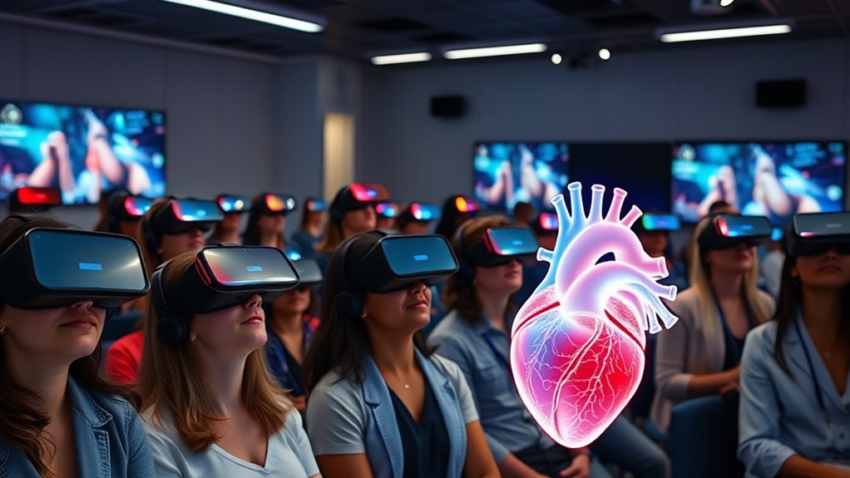
How AR and VR Are Reshaping Training and Development
Augmented Reality (AR) and Virtual Reality (VR) are revolutionizing training and development by creating immersive, interactive environments that improve learning experiences. These technologies enable realistic simulations, allowing individuals to practice in lifelike scenarios without real-world risks. This experiential learning promotes skill retention and critical thinking as it reduces cognitive load. Additionally, AR and VR encourage higher engagement and motivation, transforming passive learning into an active process. Organizations benefit from scalable, cost-effective training solutions that maintain consistency across locations. As these trends evolve, the future of workforce training holds exciting possibilities yet to be explored.
Overview of AR and VR
Augmented Reality (AR) and Virtual Reality (VR) have emerged as transformative technologies in various sectors, particularly in training and development. These innovations provide an unprecedented level of engagement and immersive experience, allowing learners to interact with content in ways previously deemed impossible. The introduction of augmented interaction enables trainees to manipulate digital elements superimposed onto the real world, improving comprehension and retention. By seamlessly blending the physical and digital domains, AR nurtures a learning environment where theoretical knowledge is contextualized through practical application.
In contrast, VR immerses users in fully simulated virtual environments, effectively transporting them to scenarios that may be risky, costly, or impractical in reality. This level of immersion not just captivates the learner's attention but additionally cultivates a sense of presence and urgency that traditional training methods often lack. Consequently, VR can simulate high-stakes situations, enabling individuals to develop critical skills without real-world consequences.
Both AR and VR technologies are redefining the paradigms of training and development by moving beyond passive learning techniques. They empower learners to engage actively with the material, facilitating deeper insight and quicker mastery of complex concepts. As organizations increasingly recognize the potential of these immersive technologies, the competitive advantage gained through improved training methodologies positions them at the forefront of their industries. By leveraging AR and VR, enterprises are not merely adapting to change; they are shaping the future environment of workforce development.
Benefits of Immersive Training
Immersive training through AR and VR offers significant advantages in skill retention and realistic scenario simulation. By engaging learners in interactive environments, these technologies improve the ability to remember and apply skills effectively. Additionally, realistic simulations prepare trainees for real-world challenges, promoting confidence and competence in their respective fields.
Enhanced Skill Retention
Training programs that leverage virtual and augmented reality technologies greatly improve skill retention among participants. These immersive experiences engage learners on a profound level, allowing them to internalize knowledge and apply it effectively in real-world situations. By utilizing virtual memory techniques, organizations can optimize the learning process, improving the ability to recall and utilize information long after training concludes.
Cognitive load, the amount of mental effort required to process information, is markedly reduced through AR and VR applications. Traditional training methods often overwhelm learners, leading to information overload and poor retention. Conversely, immersive training environments streamline information delivery, allowing learners to focus on critical skills without the distraction of extraneous data. This focused approach not only facilitates deeper learning but additionally empowers participants to master complex tasks with confidence.
Furthermore, the engaging nature of AR and VR keeps participants motivated, cultivating a sense of ownership over their learning experience. As employees become more proficient and self-assured, organizations benefit from improved performance and productivity. In the end, the integration of immersive technologies in training programs represents a paradigm shift, ensuring that skill retention becomes a strategic advantage in today's competitive environment.
Realistic Scenario Simulation
Numerous studies indicate that realistic scenario simulations considerably improve the effectiveness of training programs. By immersing participants in highly engaging virtual environments, organizations can replicate the intricacies of real-world situations. This transformative approach allows employees to practice critical skills in a safe setting, nurturing confidence and competence that translates directly to their roles.
The strength of realistic scenario simulations lies in their ability to provide interactive feedback. This immediate, data-driven response enables trainees to understand their performance in real time, facilitating rapid adjustments and enhancing learning outcomes. Unlike traditional training methods, which often rely on passive absorption, immersive simulations demand active participation, ensuring that knowledge is both acquired and retained.
Moreover, these simulations can be customized to specific industry challenges, allowing organizations to address unique training needs and scale effectively. As a result, employees emerge not merely as passive learners but as skilled practitioners, ready to tackle the demands of their roles with authority and assurance. By investing in realistic scenario simulations, organizations position themselves at the forefront of innovation in training and development, driving performance and achieving operational excellence.
Enhanced Skill Acquisition
As organizations seek to improve workforce capabilities, the integration of augmented reality (AR) and virtual reality (VR) technologies offers a transformative approach to skill acquisition. By immersing employees in dynamic, interactive environments, AR and VR facilitate unparalleled skill development that traditional training methods struggle to match. This innovative approach empowers individuals to engage in hands-on experiences, enhancing their capacity to learn complex tasks swiftly and effectively.
The immersive nature of AR and VR promotes a concentrated focus on the subject matter, thereby greatly improving learning efficiency. Employees are not mere passive recipients of information; instead, they actively participate in their learning process. This engagement not just accelerates the acquisition of new skills but also reinforces retention, equipping the workforce with the competencies necessary to excel in an increasingly competitive environment.
Furthermore, AR and VR allow for personalized training experiences customized to individual learning styles. This customization guarantees that each employee can progress at their own pace, maximizing their potential and reducing frustration. The ability to simulate real-world scenarios provides a safe space for experimentation, encouraging risk-taking and innovation without the fear of real-world consequences.
Realistic Simulations for Learning
Realistic simulations serve as a cornerstone of effective learning in AR and VR environments, providing learners with authentic experiences that mirror real-world challenges. These immersive experiences not only improve skill acquisition but additionally facilitate a deeper comprehension of complex scenarios, allowing individuals to operate within virtual environments in ways that traditional training methods cannot achieve.
The strength of realistic simulations lies in their ability to replicate high-stakes situations, offering participants the chance to practice decision-making, problem-solving, and critical thinking in a safe setting. As learners interact with these virtual environments, they develop confidence and competence, vital traits for success in their respective fields.
| Feature | Benefit |
|---|---|
| Realistic Scenarios | Prepares learners for actual challenges |
| Immediate Feedback | Accelerates learning through correction |
| Safe Learning Environment | Reduces risk while experimenting |
Incorporating advanced technologies such as AR and VR into training protocols can transform how organizations approach employee development. By leveraging these tools, companies can create customized learning experiences, improving both individual and organizational performance. The ability to engage with realistic simulations eventually empowers learners, equipping them with the necessary skills and insights to excel in their professional endeavors. As the demand for skilled professionals continues to rise, investing in immersive learning experiences will remain a critical strategy for future-ready organizations.
Increased Engagement and Motivation
Although traditional training methods often struggle to captivate learners' interest, the integration of augmented reality (AR) and virtual reality (VR) greatly improves engagement and motivation. These technologies create dynamic, interactive learning environments that enable participants to take charge of their educational experiences. By immersing learners in realistic scenarios, AR and VR boost knowledge retention and skill acquisition, transforming passive observers into active participants.
The allure of immersive experiences lies in their ability to transport individuals into lifelike situations that challenge their problem-solving abilities and decision-making skills. For instance, medical professionals can practice complex surgeries in a virtual operating room, while engineers can manipulate machinery in a simulated environment. This hands-on approach nurtures deeper connections to the material, as learners are not merely consuming information but engaging with it on a profound level.
Moreover, the gamification aspects inherent in many AR and VR applications further fuel motivation. By incorporating elements such as points, levels, and rewards, these technologies transform learning into a competitive and exhilarating experience. This shift from conventional training methods to interactive learning pathways boosts morale and cultivates a culture of continuous improvement and innovation within organizations.
In essence, AR and VR represent a paradigm shift in training and development, utilizing the capacity for engagement to create a workforce that is knowledgeable and highly motivated. As organizations embrace these transformative technologies, they position themselves at the forefront of effective training solutions, ready to tackle the challenges of an ever-changing environment.
Cost-Effectiveness in Training
The integration of augmented reality (AR) and virtual reality (VR) in training programs considerably reduces travel expenses by enabling remote learning experiences. Furthermore, these technologies provide scalable learning solutions that can be customized to meet the diverse needs of organizations. As a result, businesses can achieve a more efficient allocation of resources during enhancing the overall training effectiveness.
Reduced Travel Expenses
As organizations increasingly adopt augmented reality (AR) and virtual reality (VR) technologies for training and development, they can substantially reduce travel expenses associated with traditional training methods. By leveraging these immersive technologies, businesses can achieve significant virtual travel reduction, allowing employees to engage in high-quality training without the logistical burdens and costs of physical travel.
The affordability of immersive experiences through AR and VR not only cuts travel budgets but also reallocates those resources to improve training content and technology. Employees can participate in realistic simulations, skill-building exercises, and collaborative projects from virtually anywhere, encouraging a more flexible and efficient learning environment. This transformation not only mitigates the financial strain of travel but also improves the accessibility of training opportunities for global teams, ensuring no one is left behind because of geographical constraints.
In a competitive arena, the ability to streamline training processes while minimizing costs provides organizations with a distinct advantage. By embracing AR and VR, companies can nurture a more agile workforce, poised to respond to the constantly changing demands of their industries, all while maintaining a sharp focus on cost-effectiveness and operational excellence.
Scalable Learning Solutions
Although traditional training methods often face limitations in scalability, AR and VR technologies offer innovative solutions that can be personalized to meet the diverse needs of organizations. These technologies empower enterprises to deliver training across multiple locations simultaneously, eliminating geographical barriers and enhancing accessibility.
Cost-effectiveness is a significant advantage of scalable learning solutions. By leveraging AR and VR, organizations can minimize expenses associated with physical materials and in-person training sessions. Additionally, these immersive environments enable personalized learning experiences customized to individual skill levels and learning styles, resulting in more effective training outcomes.
Virtual collaboration is another essential component of AR and VR training solutions. Employees can engage in real-time interactions regardless of their physical location, promoting teamwork and enhancing problem-solving capabilities. This collaborative approach not only strengthens workplace relationships but also drives innovation by integrating diverse perspectives.
As organizations seek to optimize training and development initiatives, the adoption of AR and VR technologies provides a strategic advantage. By investing in scalable learning solutions, businesses can guarantee a competitive edge while nurturing a skilled, adaptable workforce equipped for future challenges.
Applications Across Industries
Augmented reality (AR) and virtual reality (VR) are transforming training and development across various industries by providing immersive learning experiences that improve skill acquisition and retention. These technologies are not merely improvements; they are revolutionizing how organizations train their workforce, delivering unprecedented engagement and effectiveness.
Consider the following applications that exemplify the strength of AR and VR:
- Healthcare Training: AR and VR simulations allow medical professionals to practice complex procedures in a risk-free environment, boosting surgical skills and patient care.
- Manufacturing Simulations: Workers can engage in realistic scenarios that replicate machinery operation and assembly line processes, leading to increased proficiency and safety.
- Military Exercises: VR creates highly adaptable training environments for soldiers, honing their tactical skills and decision-making under pressure, which is essential for mission success.
Additionally, in retail experiences, AR applications enable employees to navigate product knowledge and customer service scenarios. In construction safety training, VR immerses workers in hazardous situations to teach them proper safety protocols without real-world risks. Emergency response training benefits from these technologies as well, allowing first responders to practice their skills in realistic, high-stress situations.
As businesses across these sectors embrace AR and VR, they position themselves at the forefront of innovation. The future of training and development is here, and those who utilize these tools will certainly gain a competitive edge.
Overcoming Training Challenges
As organizations face various training challenges, the integration of AR and VR technologies offers innovative solutions. Improved engagement techniques captivate learners, whereas cost-effective training solutions reduce financial burdens. Additionally, realistic simulation scenarios provide practical experience that traditional methods often lack, ultimately promoting more effective learning outcomes.
Enhanced Engagement Techniques
Engaging learners in training programs can be a formidable challenge, but innovative techniques utilizing augmented reality (AR) and virtual reality (VR) are transforming the environment. These technologies not only captivate attention but also improve the quality of interactive learning experiences, eventually leading to enhanced retention and application of knowledge.
To effectively overcome training challenges and promote engagement, organizations are adopting several improved techniques:
- Immersive Simulations: By creating lifelike scenarios, AR and VR allow learners to practice skills in a risk-free environment, making the training relevant and impactful.
- User Feedback Integration: Real-time feedback mechanisms enable learners to receive instant guidance, reinforcing their comprehension and empowering them to navigate challenges confidently.
- Collaborative Learning Environments: AR and VR facilitate team-based activities, encouraging collaboration and peer interaction, which are vital for building strong problem-solving skills.
Cost-Effective Training Solutions
Cost-effective training solutions are vital for organizations seeking to maximize their resources during skill development. In today's competitive environment, leveraging virtual training platforms can greatly reduce costs associated with traditional training methods. By utilizing immersive technologies like augmented reality (AR) and virtual reality (VR), companies can create engaging learning experiences that require less time and financial investment.
Budget considerations are often a primary concern for decision-makers. Implementing virtual training diminishes travel and accommodation expenses and reduces the need for physical materials and facilities. In addition, AR and VR training modules can be easily scaled, allowing organizations to train a larger workforce without proportional increases in costs. This scalability guarantees that a consistent level of training quality is maintained across various locations and employee levels.
Moreover, virtual training solutions can be updated swiftly in response to evolving industry standards or organizational needs, eliminating the logistical challenges tied to traditional training refreshers. By focusing on cost-effective training solutions, organizations can empower their employees with fundamental skills while optimizing their investment in human capital. The integration of AR and VR technologies is not merely a trend; it is a strategic move in the direction of sustainable and impactful training practices.
Realistic Simulation Scenarios
Immersive technologies like AR and VR transform training by offering realistic simulation scenarios that effectively address common training challenges. These technologies utilize the strength of immersive storytelling and adaptive scenarios, allowing organizations to create training environments that are both engaging and effective.
Consider the following benefits:
- Enhanced Engagement: By placing learners in lifelike situations, AR and VR drive higher engagement levels, ensuring that participants remain focused and invested in their training.
- Real-Time Feedback: These technologies facilitate immediate feedback, enabling learners to assess their performance and make necessary adjustments on-the-fly, thereby accelerating the learning process.
- Customizable Learning Experiences: Adaptive scenarios allow training programs to be personalized to individual needs, accommodating varying skill levels and learning paces. This customization leads to improved retention and mastery of skills.
Measuring Training Effectiveness
Although implementing augmented reality (AR) and virtual reality (VR) in training programs can improve learner engagement, measuring the effectiveness of these technologies remains a critical challenge for organizations. Establishing robust performance metrics is crucial to guarantee that AR and VR training initiatives deliver tangible results. Organizations must create structured feedback loops that allow trainers and participants to evaluate the learning experience continuously.
To effectively measure the impact of AR and VR in training, organizations can utilize a combination of qualitative and quantitative metrics. The table below summarizes key metrics that can be employed:
| Metric Type | Description |
|---|---|
| Engagement Levels | Evaluating user interaction and participation rates during training sessions. |
| Knowledge Retention | Analyzing the retention of information through post-training assessments. |
| Performance Improvement | Measuring changes in performance pre- and post-training, often through KPIs. |
Future Trends in AR and VR
As organizations continue to explore the potential of augmented reality (AR) and virtual reality (VR) in training and development, several emerging trends are poised to shape the future environment of these technologies. The integration of AR and VR into learning methodologies is not just a passing phase; it represents a paradigm shift grounded in improved user experience and the capabilities of emerging technologies.
- Personalized Learning Environments: Future AR and VR applications will utilize advanced analytics and AI to deliver personalized training experiences. Tailoring content to individual learning styles and paces will encourage deeper engagement and retention.
- Collaborative Virtual Spaces: Organizations are increasingly recognizing the importance of collaboration. Improved AR and VR platforms will facilitate real-time interactions among remote teams, simulating in-person experiences and promoting teamwork, regardless of geographical barriers.
- Gamification of Training: The integration of gamification elements into AR and VR training modules will boost user engagement. By incorporating competitive elements and rewards, organizations can motivate employees to excel in their learning experiences, driving performance and productivity.
As these trends unfold, organizations must remain vigilant in adapting their training strategies to leverage the full potential of AR and VR. The future demands a commitment to innovation, ensuring that training environments not only meet the needs of today's workforce but anticipate the demands of tomorrow's swiftly evolving business environment.
Case Studies and Success Stories
As many organizations are still in the exploratory phase of implementing augmented reality (AR) and virtual reality (VR) in training and development, several notable case studies demonstrate the transformative potential of these technologies. One striking example is Walmart, which utilizes VR to train employees on critical skills such as customer service and emergency response. This immersive approach has led to a 10% increase in employee confidence, directly impacting store performance.
Another compelling success story comes from Boeing, which integrated AR into its assembly line training. By employing AR headsets, technicians receive real-time guidance, reducing assembly time by 25% and minimizing errors substantially. This case study exemplifies how AR can streamline complex processes, instilling efficiency and precision into training frameworks.
Lastly, the healthcare sector showcases the influence of VR with the case of Oxford Medical. Their immersive simulations allow medical students to practice surgical procedures in a risk-free environment, improving skill acquisition and retention. As these success stories illustrate, AR and VR are not just trends; they are redefining how organizations approach training.
| Company | Technology Used | Outcome |
|---|---|---|
| Walmart | VR | 10% increase in employee confidence |
| Boeing | AR | 25% reduction in assembly time |
| Oxford Medical | VR | Improved skill acquisition |
These case studies and success stories exemplify the profound impact AR and VR can have on training and development, enabling organizations to uplift their workforce capabilities.
Getting Started With AR and VR
Getting started with augmented reality (AR) and virtual reality (VR) in training and development requires a strategic approach to guarantee successful implementation. To utilize the full potential of these transformative technologies, organizations must focus on several critical components that lay the groundwork for effective deployment.
- Define Objectives: Clearly outline what you aim to achieve with AR and VR. This includes identifying specific skills to develop, performance metrics to improve, and how these technologies can improve learning outcomes.
- Assess Technology Requirements: Evaluate the necessary hardware and software for your AR and VR programs. This includes selecting appropriate devices, platforms, and tools that align with your training goals and budget constraints.
- Develop Implementation Strategies: Create a thorough plan that encompasses pilot testing, staff training, and integration with existing training programs. This strategy should additionally include a feedback loop for continuous improvement based on user experiences.
Frequently Asked Questions
What Types of Devices ARe Needed for AR and VR Training?
To effectively implement AR and VR training, organizations must consider hardware compatibility and device accessibility. Crucial devices include high-performance headsets, such as the Oculus Quest or Microsoft HoloLens, which offer immersive experiences. Furthermore, robust computers or mobile devices may be required to support advanced applications. Ensuring that training programs are compatible with widely-used hardware improves accessibility, allowing for a broader adoption and integration of these technologies in professional development initiatives.
How Do AR and VR Impact Traditional Training Methods?
Augmented and virtual realities provide impactful pathways to improve traditional training methods. By nurturing immersive experiences, these technologies raise engagement levels, transforming passive learning into active participation. Traditional approaches often struggle with retention and motivation; yet, AR and VR captivate learners, compelling them to interact with content dynamically. This shift not just sharpens skills but additionally cultivates a deeper comprehension, ultimately revolutionizing the environment of professional development and equipping individuals with crucial competencies for success.
ARe There Any Safety Concerns With AR and VR Training?
Safety concerns regarding augmented reality (AR) and virtual reality (VR) training primarily revolve around user experience and ethical considerations. Users may experience physical discomfort, disorientation, or psychological effects, which can compromise learning efficacy. Furthermore, the potential for misuse of data and privacy violations necessitates rigorous ethical scrutiny. Ensuring a secure environment during maximizing the benefits of immersive technologies is essential for organizations aiming to leverage these innovations for effective training and development.
Can AR and VR Be Used for Remote Training Sessions?
Envision a world where training sessions are conducted in a digital coliseum, where remote collaboration reigns supreme. Augmented and virtual reality enable participants to engage in immersive virtual environments, transcending geographical barriers. This innovative approach not merely improves learning experiences but additionally cultivates a sense of camaraderie among distant teams. By leveraging AR and VR, organizations can transform their training methodologies, ensuring that knowledge is not solely shared, but experienced collectively in a dynamic, unforgettable manner.
What Skills ARe Most Effectively Developed Using AR and VR?
Augmented Reality (AR) and Virtual Reality (VR) are particularly effective in developing communication skills and technical expertise. By immersing learners in realistic scenarios, these technologies improve interpersonal interactions and promote collaboration in diverse environments. Furthermore, AR and VR provide hands-on experiences for technical training, enabling individuals to practice complex tasks in a controlled setting. This combination not merely accelerates skill acquisition but likewise prepares professionals to excel in high-stakes situations, eventually driving organizational success.