
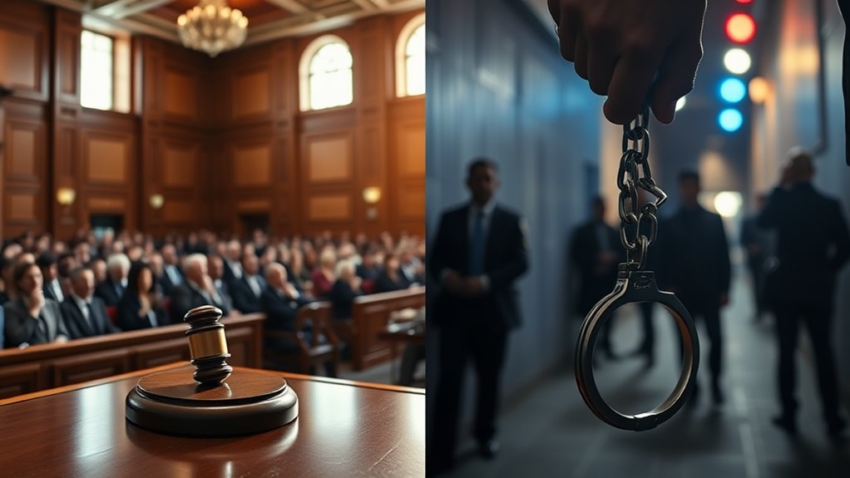
The Differences Between Civil and Criminal Law Explained
Civil law and criminal law serve different purposes in the legal framework. Civil law addresses disputes between individuals or entities, focusing on rights, obligations, and compensatory remedies. Conversely, criminal law involves the state prosecuting individuals for offenses that threaten public safety, with penalties such as imprisonment or fines. The burden of proof additionally varies; civil cases require proof by a preponderance of the evidence, whereas criminal cases demand proof beyond a reasonable doubt. Grasping these differences improves comprehension of legal proceedings and consequences. Exploring further will provide greater insight into these fundamental facets of the law.
Definition of Civil Law
Civil law, a fundamental branch of the legal system, governs disputes between individuals or entities, typically concerning rights, obligations, and liabilities. It encompasses a wide array of legal principles designed to resolve non-criminal matters, such as contracts, property disputes, family law, and torts. At its core, civil law aims to provide a mechanism for individuals to seek redress and guarantee that justice is served in cases where personal or financial interests are at stake.
The legal principles underlying civil law are rooted in the notion of accountability. When one party believes that another has violated their rights or failed to fulfill an obligation, they may initiate a civil lawsuit to seek compensation or enforce a duty. Unlike criminal law, where the state prosecutes offenders for violations against society, civil law focuses on resolving conflicts between private parties.
In civil cases, the burden of proof lies with the plaintiff, who must demonstrate the validity of their claims based on a preponderance of evidence. Remedies in civil law typically involve monetary compensation, injunctions, or specific performance, rather than punitive measures. This distinguishes civil law from criminal law, where the emphasis is on punishment and deterrence.
Definition of Criminal Law
Criminal law serves as an indispensable framework for maintaining public order and safety by delineating behaviors deemed unacceptable and establishing corresponding penalties. It encompasses a body of laws that define conduct considered harmful to society, individuals, or the state, and outlines the legal consequences for such actions. The primary purpose of criminal law is to deter criminal behavior, rehabilitate offenders, and provide justice for victims.
Key aspects of criminal law include:
- Definition of Offenses: Criminal law categorizes actions as either misdemeanors or felonies, determining the severity of the offense and its associated penalties.
- Prosecution and Defense: In criminal cases, the state prosecutes individuals accused of crimes, while defendants have the right to legal representation to defend against charges.
- Burden of Proof: The prosecution must prove the defendant's guilt "beyond a reasonable doubt," a higher standard than in civil law, which has a "preponderance of evidence" standard.
- Sentencing and Punishment: Criminal law specifies the range of punishments for various offenses, which may include fines, imprisonment, community service, or probation.
Understanding criminal law is fundamental for recognizing how legal consequences are determined and enforced. It serves as a deterrent against unlawful behavior, ensuring that individuals are held accountable for their actions. By clarifying the boundaries of acceptable conduct, criminal law plays an integral role in protecting society and maintaining order. Moreover, criminal law works in tandem with other legal frameworks, such as employment law, to create a comprehensive system that governs individual behavior and organizational practices. The importance of employment law cannot be overstated, as it establishes guidelines for fair treatment in the workplace, promoting both ethical standards and legal compliance. In this way, criminal law and employment law together foster a safer, more just society by addressing a wide range of issues that impact both individuals and communities.
Key Objectives of Each
The objectives of criminal law and civil law serve distinct yet complementary roles within the legal system. Criminal law primarily aims to maintain public order and safety by deterring criminal behavior. Through various deterrence strategies, such as incarceration and fines, the criminal justice system seeks to discourage individuals from engaging in unlawful acts. The underlying premise is that the fear of punishment will inhibit future offenses, thereby protecting society as a whole.
In contrast, civil law focuses on resolving disputes between individuals or entities and ensuring that victims receive justice and compensation. One of its key objectives is to achieve restitution goals, which involve restoring the injured party to the position they were in prior to the harm. This often includes monetary compensation for damages or specific performance to rectify a wrong. Civil law emphasizes the concept of liability, holding parties accountable for their actions in a way that encourages responsible behavior.
While criminal law emphasizes punishment and deterrence, civil law prioritizes resolution and restitution. Both systems work in tandem to promote justice, with criminal law serving as a mechanism to prevent harm and civil law providing a means for individuals to seek redress. Ultimately, comprehending these key objectives helps clarify the roles that each branch of law plays in nurturing a fair and orderly society.
Parties Involved in Cases
In legal proceedings, comprehending the parties involved is crucial for grasping the dynamics of both civil and criminal cases. The legal framework defines specific roles for the individuals participating in these cases, which greatly influence the course of the proceedings.
In civil law, the primary parties include:
- Plaintiff: The party who initiates the lawsuit, claiming to have been wronged or harmed.
- Defendant: The individual or entity being accused or sued, tasked with responding to the plaintiff's claims.
Conversely, in criminal law, the structure shifts to reflect the state's role in prosecuting offenses:
- Prosecution: Representing the government, the prosecution is responsible for presenting evidence against the defendant, aiming to establish guilt beyond a reasonable doubt.
- Defense: The defense represents the accused, working to protect their rights and challenge the prosecution's case.
Understanding these roles is fundamental, as they dictate the strategies employed during legal proceedings. In civil cases, the plaintiff seeks remedies such as compensation or specific performance, whereas the defendant may argue against liability. In criminal cases, the stakes are higher, with the prosecution seeking penalties such as imprisonment, whereas the defense works to guarantee a fair trial and contest the evidence presented.
Recognizing the differences in parties involved in civil and criminal law elucidates how each system operates, highlighting the contrasting objectives and implications of the legal process.
Burden of Proof
Burden of proof serves as a fundamental principle in both civil and criminal law, dictating which party is responsible for establishing the validity of their claims. In criminal law, the burden of proof lies with the prosecution, which must demonstrate the defendant's guilt "beyond a reasonable doubt." This high standard of proof is vital, as it guarantees that an individual's liberty is not compromised without compelling evidence of wrongdoing. The evidentiary requirements in criminal cases are stringent, reflecting the serious consequences that may result from a conviction.
Conversely, in civil law, the burden of proof usually falls on the plaintiff, who must establish their case by a "preponderance of the evidence." This standard of proof is lower than that in criminal cases, requiring the plaintiff to show that their claims are more likely true than not. The evidentiary requirements in civil cases focus on demonstrating a greater than 50% likelihood that the facts support the plaintiff's arguments.
Both legal arenas utilize the burden of proof to guarantee fairness and justice. The distinct standards of proof highlight the varying stakes involved—criminal cases often carry the potential for imprisonment, while civil cases typically result in monetary compensation or specific performance. Comprehending the burden of proof is fundamental for grasping how legal disputes are resolved and the responsibilities of each party within the judicial system.
Types of Cases
Whereas civil and criminal law serve distinct functions within the legal system, they encompass a variety of case types that reflect their unique objectives. Comprehending the types of cases is vital for grasping the legal distinctions between these two branches of law.
Civil law primarily deals with disputes between individuals or organizations, often involving monetary compensation or specific performance. Common case examples include:
- Contract disputes: Cases where one party claims a breach of agreement.
- Tort claims: Involving personal injury or property damage, such as negligence or defamation.
- Family law matters: Including divorce, child custody, and adoption issues.
- Property disputes: Conflicts over real estate ownership or boundaries.
In contrast, criminal law addresses offenses against the state or public, where the government prosecutes the accused. Criminal cases aim to punish wrongdoing and deter future offenses. Case examples encompass:
- Felonies: Serious crimes like murder, robbery, or drug trafficking.
- Misdemeanors: Less severe offenses, such as petty theft or vandalism.
- White-collar crimes: Fraud, embezzlement, and insider trading cases.
- Traffic violations: Offenses such as DUI or reckless driving.
These case examples illustrate the legal distinctions between civil and criminal matters, highlighting how each area of law functions to resolve disputes and maintain societal order. Grasping these differences is fundamental for anyone traversing the legal environment.
Outcomes and Remedies
The resolution of civil and criminal cases results in distinct outcomes and remedies that reflect the nature of the legal principles involved. In civil law, the primary goal is to provide compensation or restitution to the aggrieved party. The outcomes typically involve monetary damages, such as compensatory or punitive damages, or specific performance, which mandates a party to fulfill their contractual obligations. These remedy types are designed to restore the injured party to their pre-incident state or to deter future misconduct.
In contrast, criminal law focuses on punishing the offender and deterring future criminal behavior. The outcomes in criminal cases can include imprisonment, probation, fines, or community service, which serve to penalize the wrongdoer and safeguard society. The remedy types in criminal law are not aimed at compensating the victim but rather at ensuring justice is served and public order is maintained.
The outcome differences between civil and criminal cases underscore the varying objectives of each legal system. Although civil law seeks to remedy individual grievances, criminal law pursues societal interests through punishment. This fundamental distinction informs not just the types of remedies awarded but likewise the burdens of proof required in each case, with civil cases operating on a "preponderance of the evidence" standard, whereas criminal cases demand proof "beyond a reasonable doubt." Comprehending these differences is crucial for traversing the challenges of legal disputes and their resolutions.
Legal Procedures and Processes
The legal procedures and processes in civil and criminal law differ greatly, particularly in how cases are initiated. In criminal cases, the state bears the responsibility to prove the defendant's guilt, whereas in civil cases, the burden of proof lies with the plaintiff. Furthermore, the judicial outcomes in these two areas reflect distinct standards and implications for the parties involved.
Case Initiation Differences
Although both civil and criminal cases originate with the filing of legal documents, the processes for initiating these cases differ considerably. In civil law, the case commencement typically begins with the plaintiff's initiation, where the aggrieved party files a complaint against the defendant. This document outlines the grievances and the relief sought.
In contrast, criminal cases are initiated by the state or federal government, usually through the filing of a formal charge or indictment. This reflects the public interest in prosecuting offenses against society as a whole.
Key differences in case initiation include:
- Plaintiff vs. Prosecution: In civil cases, the plaintiff brings the case; in criminal cases, it's the prosecution representing the government.
- Filing Documents: Civil cases require a complaint; criminal cases often start with a police report leading to formal charges.
- Purpose: Civil law seeks to remedy a private wrong, whereas criminal law aims to punish wrongdoing and deter future offenses.
- Consequences: Civil cases typically result in monetary compensation; criminal cases may lead to imprisonment or fines.
These distinctions set the stage for divergent legal processes in both sectors.
Burden of Proof
Establishing the burden of proof is a fundamental principle that dictates the responsibility of a party to prove their claims in legal proceedings. In civil law, the burden of proof typically lies with the plaintiff, who must demonstrate their case by a preponderance of the evidence. This means that the evidence must show that it is more likely than not that the claims are true. Conversely, in criminal law, the burden shifts to the prosecution, which must prove the defendant's guilt beyond a reasonable doubt, a notably higher standard.
These burden standards illustrate essential proof differences between the two legal systems. In civil cases, the stakes are primarily financial, whereas in criminal cases, the potential for imprisonment adds a layer of complexity and seriousness. The differing burdens reflect the varying degrees of certainty required for outcomes in each type of case. Comprehending these distinctions is crucial for grasping how justice is administered in civil and criminal contexts. Consequently, the burden of proof serves as a cornerstone in ensuring fairness and accountability in legal proceedings, guiding parties on their responsibilities and expectations.
Judicial Outcomes Variations
Variations in judicial outcomes between civil and criminal law are shaped by distinct legal procedures and processes. The nature of each legal system influences how cases are adjudicated, leading to different interpretations and consequences for the parties involved.
Key differences in judicial outcomes include:
- Standard of Proof: Criminal law requires proof beyond a reasonable doubt, whereas civil law relies on a preponderance of evidence.
- Judicial Interpretations: Courts may interpret laws differently based on the context, impacting the outcome of cases in both civil and criminal proceedings.
- Sentencing Guidelines: Criminal cases often involve established sentencing guidelines that dictate penalties, whereas civil cases typically result in monetary damages or injunctions without fixed sentencing constraints.
- Appeals Process: The process for appealing decisions differs considerably; in criminal cases, defendants have specific rights and protections that may not apply in civil disputes.
These procedural distinctions not merely affect the outcome of individual cases but additionally shape the broader framework of justice, emphasizing the importance of comprehending the nuances between civil and criminal law.
Frequently Asked Questions
How Do Civil and Criminal Laws Affect Everyday Life?
Civil and criminal laws greatly shape everyday life by establishing a framework for legal consequences that govern individual behavior and societal norms. Civil laws address disputes between individuals or organizations, impacting areas such as contracts and property rights, whereas criminal laws define offenses against the state, enforcing societal standards. The interplay of these legal systems influences public safety, personal rights, and the overall societal impact, nurturing an environment where individuals are held accountable for their actions.
Can a Case Be Both Civil and Criminal?
Yes, a case can be both civil and criminal, often referred to as overlapping jurisdictions. For instance, consider a DUI incident where the driver faces criminal charges for violating traffic laws and civil repercussions for damages caused to another party's property or personal injury. Such cases exemplify how individuals can encounter both legal avenues concurrently, addressing public safety concerns through criminal law as well as providing remedies for private grievances through civil law.
What Are Common Defenses in Civil Cases?
Common defenses in civil cases often involve challenging the validity of negligence claims or breach of contracts. A defendant may argue that they acted reasonably under the circumstances, thereby negating the negligence claim. Furthermore, they might assert that the contract was never valid because of factors such as misrepresentation or duress. Other defenses include the statute of limitations, contributory negligence, or the plaintiff's failure to mitigate damages, all of which can greatly impact the outcome.
How Do Penalties Differ Between Civil and Criminal Cases?
Penalties in civil and criminal cases differ markedly, a fact often overlooked by those unfamiliar with legal systems. Civil penalties typically involve monetary damages or specific performance, enforced through civil litigation methods. Conversely, criminal penalties may include imprisonment, fines, or community service, with enforcement methods carried out by law enforcement and the judicial system. Comprehending these distinctions highlights the varying consequences individuals may face depending on the nature of the legal issue at hand.
Can Civil Cases Be Appealed?
Yes, civil cases can be appealed. When a party believes that an error occurred during the trial, they may initiate civil appeals through the appellate process. This involves submitting the case to a higher court for review, focusing on legal interpretations and procedural correctness rather than reevaluating factual evidence. The appellate court can affirm, reverse, or remand the case, providing a crucial mechanism for ensuring fairness and justice within civil litigation.