
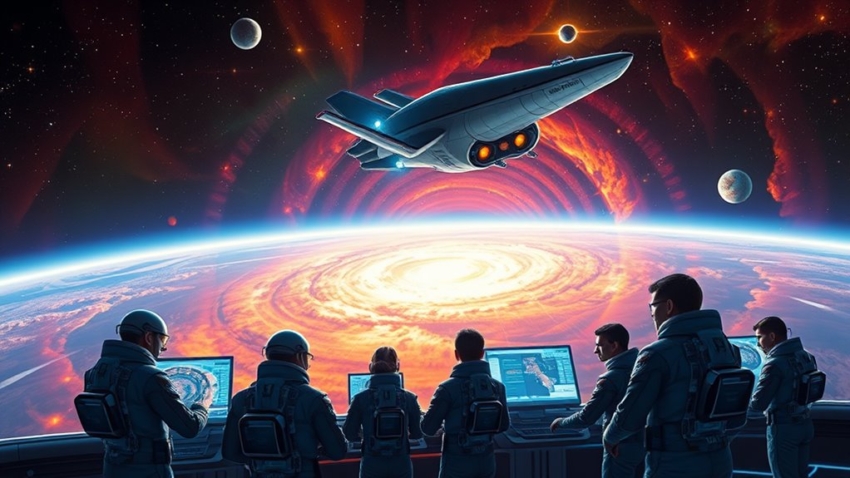
The Future of Space Exploration Through Advanced Technology
The future of space exploration is being reshaped by advanced technology, particularly through the integration of artificial intelligence and robotics. AI improves mission efficiency by enabling real-time data analysis and predictive capabilities, greatly minimizing risks. Robotic systems are vital for conducting complex missions in hazardous environments, allowing for autonomous navigation and immediate decision-making. Next-generation propulsion systems are redefining interstellar travel with remarkable fuel efficiency and precision. In addition, advanced telescopes facilitate groundbreaking discoveries of exoplanets and cosmic phenomena. These innovations promise an exciting trajectory for exploration, leading to new opportunities and discoveries awaiting those enthusiastic for knowledge.
The Role of Artificial Intelligence
As space exploration continues to evolve, artificial intelligence (AI) emerges as a pivotal force in improving mission efficiency and safety. By leveraging sophisticated machine learning algorithms, space agencies can process vast amounts of data generated by space missions, allowing for more informed decision-making and strategic planning. AI systems are adept at identifying patterns and anomalies within complex datasets, enabling real-time data analysis that can greatly reduce the risks associated with interstellar travel.
The integration of AI in mission control operations streamlines the monitoring of spacecraft systems, ensuring peak performance during critical phases of exploration. For instance, AI can predict potential system failures before they occur, allowing engineers to implement preventative measures that safeguard both human and robotic assets. This predictive capability is crucial for maintaining the integrity of missions that span months or even years in the unforgiving environment of space.
Moreover, AI-driven data analysis improves our comprehension of celestial phenomena. By automating the examination of astronomical data, AI empowers scientists to uncover insights that would have otherwise remained hidden. This transformative technology not only accelerates research but additionally positions humanity to capitalize on the vast resources available beyond our planet.
Innovations in Robotics
The advancements in artificial intelligence complement significant innovations in robotics, which play a vital role in improving space exploration capabilities. As we venture deeper into the cosmos, the integration of robotic improvements is essential for executing complex missions with unparalleled efficiency and precision. Modern robotic systems are engineered to perform a variety of tasks, from conducting routine maintenance on spacecraft to executing intricate scientific experiments on distant planetary surfaces.
Autonomous navigation is a transformative aspect of these robotic innovations. This technology empowers robots to traverse uncharted terrains without direct human intervention, utilizing sophisticated algorithms and sensor systems to map their environment in real-time. Such capabilities not only increase the operational range of our exploratory missions but also mitigate the risks associated with human involvement in potentially hazardous situations.
Robotic advancements extend beyond mere mechanical capabilities; they embody the fusion of intelligence and adaptability. For instance, advanced robotic systems can analyze data on-the-fly, facilitating immediate decision-making that is vital in dynamic environments. This guarantees that exploration teams can optimize their strategies and respond to unforeseen challenges with agility and confidence.
Furthermore, the deployment of robotics in space exploration is a strategic advantage that improves our competitive edge in the global arena. Nations that invest in state-of-the-art robotic technologies position themselves as leaders in the new frontier of space. As we look to the stars, the innovations in robotics serve as the backbone of a bold and ambitious future, empowering humanity to reveal the mysteries of the universe. Moreover, these advancements not only enhance our capabilities in exploration but also pave the way for international collaborations that drive progress across multiple scientific disciplines. As private companies and government agencies alike harness the power of robotics, we will witness a surge in discoveries that could transform our understanding of space and Earth. With many tech professionals, including those involved in robotics, moving to Austin in 2024, the city is poised to become a hub for innovation and a focal point for the future of space technology.
Next-Generation Propulsion Systems
As traditional propulsion systems have propelled humanity into space, next-generation propulsion technologies promise to transform our approach to interstellar travel. The emergence of plasma propulsion and electric thrusters heralds a new era, one where speed, efficiency, and versatility will redefine our celestial ambitions. These advancements leverage the principles of electromagnetic fields and ionized gases to generate thrust, offering unprecedented performance metrics compared to conventional chemical rockets.
Plasma propulsion systems, for instance, utilize high-energy plasma to achieve remarkable specific impulse, enabling spacecraft to traverse vast distances with minimal fuel consumption. This not merely extends mission durations but additionally allows for the possibility of reaching destinations previously deemed unreachable within a human lifetime. The efficiency of these systems translates into reduced operational costs and improved mission feasibility, particularly for long-term exploratory missions to Mars and beyond.
Electric thrusters, conversely, emphasize precision and control, crucial for delicate maneuvers in the harsh environment of space. With the capability to operate continuously over extended periods, they maintain a steady thrust that can effectively alter a spacecraft's trajectory or velocity with remarkable accuracy.
The integration of these next-generation propulsion systems into our space exploration arsenal is not merely an evolution but a revolution. They empower humankind to push the boundaries of our reach, revealing the mysteries of our universe and paving the way for a future where interstellar travel is not just a dream but a tangible reality.
Advanced Spacecraft Autonomy
Utilizing the strength of advanced algorithms and artificial intelligence, modern spacecraft are increasingly equipped with autonomy that improves their operational capabilities in the unforgiving environment of space. This autonomy enhances spacecraft guidance and mission planning, empowering them to execute complex tasks without constant human oversight. As the scale and ambition of space missions expand, the necessity for autonomous systems becomes essential.
Advanced spacecraft autonomy enables real-time data analysis, allowing vehicles to assess their surroundings and make informed decisions. This capability is vital for maneuvering through the challenging terrains of celestial bodies, where traditional communication methods may be hindered by distance or time delays. By leveraging sophisticated sensors and machine learning models, autonomous spacecraft can refine their trajectories, improve fuel efficiency, and adapt to unforeseen obstacles.
Moreover, the integration of autonomy into mission planning greatly streamlines operations. Intelligent systems can autonomously devise ideal mission profiles, adjusting to dynamic conditions and resource constraints. This not only minimizes risks but additionally maximizes the chances of mission success, ensuring that valuable scientific objectives are met without unnecessary delays.
As we stand on the brink of a new era in space exploration, the advancement of spacecraft autonomy is a transformative factor. It empowers humanity to push boundaries, explore distant frontiers, and reveal the mysteries of the universe with unprecedented confidence and precision. Through the relentless pursuit of state-of-the-art technology, we are redefining what is possible in our quest to understand the cosmos.
The Impact of New Telescopes
How do new telescopes transform our grasp of the universe? The advent of advanced telescopes not only improves our observational capabilities but additionally equips humanity to reveal the profound mysteries of the cosmos. These instruments are at the forefront of exoplanet discovery, allowing scientists to identify planets in distant solar systems and assess their potential for harboring life. Moreover, they contribute to our awareness of the cosmic background radiation, providing insights into the universe's formative stages.
The following table illustrates the transformative impact of new telescopes on various aspects of space exploration:
| Aspect | Impact |
|---|---|
| Exoplanet Discovery | Enhanced detection of Earth-like planets in habitable zones. |
| Cosmic Background | Improved mapping of the early universe, revealing its evolution. |
| Spectroscopy | Analysis of atmospheric compositions of exoplanets, identifying potential biosignatures. |
| Dark Matter Studies | Exploration of dark matter distribution through gravitational lensing effects. |
As we stand on the precipice of a new era in astronomy, these next-generation telescopes equip us with unparalleled capability to scrutinize the universe. They enable us to challenge existing paradigms and expand our scientific frontiers, inspiring a new generation of exploration and insight. Essentially, the impact of new telescopes is not merely incremental; it is revolutionary, redefining our place in the cosmos and our capacity to explore it.
Frequently Asked Questions
How Will Space Exploration Benefit Everyday Life on Earth?
Space exploration greatly improves everyday life on Earth through advancements in satellite technology and improved resource management. Satellite systems facilitate global communications, weather forecasting, and navigation, directly impacting business operations and personal convenience. Additionally, insights gained from space missions inform sustainable resource management practices, enabling efficient utilization of Earth's materials. As we leverage these technologies, we boost our capabilities, driving economic growth and ensuring a more resilient future for society.
What Are the Ethical Considerations of Space Exploration?
Conceive of a ship sailing uncharted waters, driven by ambition yet challenged by moral dilemmas. Space ethics demands careful consideration of resource allocation; prioritizing exploration must not overshadow the responsibilities we hold toward our planet and its inhabitants. As we venture into the cosmos, we face questions of environmental stewardship, the potential for exploitation of extraterrestrial resources, and the implications of colonization. Balancing ambition with ethical responsibility is paramount for sustainable progress.
How Do We Ensure the Safety of Astronauts in Deep Space?
Ensuring the safety of astronauts in deep space necessitates robust strategies addressing inherent risks. Effective radiation shielding is paramount, utilizing advanced materials and designs to mitigate exposure to cosmic radiation. Moreover, a resilient life support system is critical, ensuring sustainable air, water, and food supply as well as managing waste. Continuous monitoring and adaptive technologies will improve situational awareness, empowering astronauts to respond to challenges effectively, cultivating a secure environment vital for successful missions.
What Are the Potential Costs of Future Space Missions?
The potential costs of future space missions are significant and multifaceted, necessitating careful budget forecasting to guarantee financial viability. Mission funding must account for various elements, including technological development, launch operations, and crew safety measures. As we aspire to explore deeper into space, it is imperative to secure robust financial backing from both governmental and private sectors. Strategic investment in these missions will eventually determine our capabilities and success in accessing the cosmos.
How Can International Cooperation Enhance Space Exploration Efforts?
International cooperation in space exploration is like a symphony orchestra, where each nation contributes unique instruments to create a harmonious outcome. By engaging in joint missions, countries can share resources and expertise, considerably reducing costs and enhancing mission success. Collaborative research cultivates innovative solutions to complex challenges, whereas additionally promoting peaceful relations. Such alliances not solely expand our scientific knowledge but furthermore raise national prestige, positioning participating nations as leaders in this celestial frontier.