
The Role of Yoga in Improving Physical and Mental Health
As you seek to improve your overall well-being, you're likely to find that yoga plays an essential role in boosting your physical and mental health, with benefits ranging from chronic pain management to improved cardiovascular health. You'll discover that yoga combines postures, breathing techniques, and meditation to address root causes of pain, improving circulation, flexibility, and balance. Regular practice can likewise lower blood pressure, aid in weight management, and increase cognitive function. By incorporating yoga into your routine, you'll be taking a holistic approach to your health, and as you explore further, you'll uncover even more ways yoga can transform your life.
Yoga's Impact on Chronic Pain
Since chronic pain has become a ubiquitous issue, affecting millions of people globally, it is essential to explore alternative approaches to manage this debilitating condition. As you navigate the complex environment of chronic pain relief, you'll find that holistic approaches are gaining traction. One such approach is yoga, an ancient practice that has been shown to have a profound impact on chronic pain management.
By incorporating yoga into your routine, you can experience a significant reduction in chronic pain. This is due to yoga combining physical postures, breathing techniques, and meditation to target the root causes of pain. As you practice yoga, you'll notice improved circulation, reduced inflammation, and improved flexibility, all of which contribute to chronic pain relief.
Moreover, yoga's focus on mindfulness and relaxation helps to reduce stress and anxiety, common triggers of chronic pain. By cultivating a greater sense of body awareness, you'll become more attuned to your physical and emotional needs, allowing you to better manage your pain. As you explore the realm of yoga, you'll discover a range of styles and techniques customized to meet your unique needs, from gentle Hatha to restorative yoga. By embracing yoga as a holistic approach to chronic pain relief, you'll find a path leading to healing, empowerment, and a greater sense of well-being.
Improving Flexibility and Balance
As you continue to utilize the benefits of yoga for chronic pain relief, you'll find that improving flexibility and balance becomes a natural byproduct of your practice. Yoga poses, such as downward-facing dog and warrior II, help increase flexibility by lengthening the muscles and tendons. These poses additionally engage your core, which is crucial for maintaining balance.
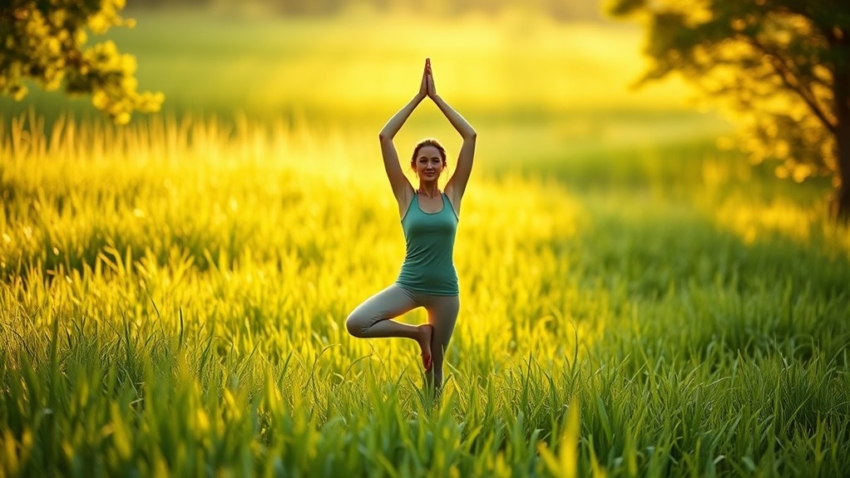
Regularly practicing balance exercises, like tree pose and eagle pose, challenges your body to stabilize and adapt. This, in turn, improves your overall balance and reduces the risk of injury. You'll notice that your posture improves, and you'll feel more confident in your daily activities.
Furthermore, yoga's focus on alignment and mindful movement helps you develop greater body awareness. This increased awareness enables you to detect subtle imbalances and make adjustments to maintain proper alignment. As you become more attuned to your body, you'll be better equipped to prevent injuries and maintain peak flexibility and balance.
Incorporating yoga into your routine can have a profound impact on your overall physical health. By improving flexibility and balance, you'll experience a greater sense of freedom and confidence in your body. This, in turn, will improve your mental well-being, allowing you to live a more fulfilling life.
Lowering Blood Pressure Naturally
As you practice yoga, you'll discover that regulating your breathing patterns can have a profound impact on your blood pressure. By reducing your stress response, you'll likewise reduce the strain on your cardiovascular system, which can lead to lower blood pressure. Furthermore, yoga's ability to increase vasodilation – the widening of blood vessels – can further contribute to a natural decrease in blood pressure.
Regulating Breathing Patterns
By paying attention to your breathing patterns, you can take control of your body's natural response to stress and anxiety, which contributes to high blood pressure. Through yoga, you can develop conscious breathing exercises that help regulate your breath, calming your mind and body. By slowing down your breathing rate, you can lower your heart rate, reducing the pressure on your cardiovascular system.
Practicing breath control through yoga helps you focus on the present moment, letting go of worries and tension. This, in turn, reduces your body's stress response, which is a significant contributor to high blood pressure. Regular breathing exercises can likewise improve your overall respiratory function, increasing oxygenation of your body's tissues and organs.
Reducing Stress Response
You can reduce your body's stress response through yoga, which in turn helps lower blood pressure naturally. When you're stressed, your body produces cortisol, a hormone that raises blood pressure. By incorporating yoga into your daily routine, you can decrease cortisol levels and promote relaxation. Mindful meditation, a key component of yoga, helps calm your mind and body, reducing feelings of anxiety and tension. Yoga's relaxation techniques, such as deep breathing and progressive muscle relaxation, in addition help slow down your heart rate and lower blood pressure. Regular yoga practice can even rewire your brain to respond more calmly to stressful situations. By reducing your body's stress response, you'll experience a decrease in blood pressure, leading to a healthier heart and overall well-being. As you make yoga a regular part of your self-care, you'll feel more calm, centered, and in control.
Increasing Vasodilation
When cortisol levels decrease through regular yoga practice, your blood vessels relax and dilate, allowing for greater vasodilation. This means you'll experience better blood flow throughout your body, which can have a significant impact on your overall health. As vasodilation increases, your blood pressure naturally lowers, reducing the risk of heart disease, stroke, and other cardiovascular conditions.
Regular yoga practice offers numerous benefits that contribute to greater vasodilation. By incorporating physical postures, breathing techniques, and meditation into your routine, you'll experience a decrease in stress and anxiety, leading to a decrease in cortisol levels. As a result, your blood vessels will relax, allowing for improved blood flow and oxygenation to your muscles and organs.
The yoga benefits don't stop there. Increased vasodilation also means you'll experience improved exercise performance, greater endurance, and faster recovery times. By incorporating yoga into your wellness routine, you'll be taking a proactive approach to improving your physical and mental health, naturally reducing your risk of chronic diseases.
Reducing Stress and Anxiety
Stress and anxiety can be overwhelming, making it difficult to focus on daily tasks and enjoy life to the fullest. As you go about your day, you may find yourself feeling tense, irritable, and unsure of how to manage your emotions. Yoga can be a potent tool in reducing stress and anxiety, helping you regain control over your mental and emotional well-being.
| Yoga Technique | Physiological Response | Emotional Benefit |
|---|---|---|
| Deep Breathing | Slows heart rate, lowers blood pressure | Reduces feelings of panic and anxiety |
| Downward-Facing Dog | Stretches entire back, relaxes shoulders | Increases sense of calm and relaxation |
| Child's Pose | Calms nervous system, reduces cortisol | Promotes feelings of safety and security |
| Tree Pose | Improves balance, focus, and concentration | Boosts emotional regulation and stability |
| Savasana | Slows brain waves, relaxes entire body | Induces deep relaxation, reduces stress |
Enhancing Cognitive Function
As cognitive demands continue to escalate in today's fast-paced world, it is essential to optimize your brain's performance. You can't afford to let mental fogginess hold you back from achieving your goals. Yoga has been shown to be an effective tool for cognitive improvement, leading to improved mental clarity and focus.
Regular yoga practice can help you:
- Improve attention and concentration: By training your mind to focus on the present moment, you'll become more adept at filtering out distractions and staying on task.
- Augment memory and learning: Yoga has been shown to increase grey matter in the brain, leading to improved memory and learning abilities.
- Boost processing speed and efficiency: As you become more comfortable with yoga, you'll notice your reaction times and decision-making skills improving.
- Develop greater mental flexibility and creativity: Yoga's emphasis on mindful movement helps you approach problems from new angles, leading to innovative solutions.
Boosting Mood and Happiness
When you practice yoga regularly, you'll find that it helps to reduce stress hormones like cortisol in your body. At the same time, yoga increases serotonin levels, which can help alleviate symptoms of depression and anxiety. By regulating these hormones, you'll start to notice a significant improvement in your overall mood and happiness.
Reduces Stress Hormones
By incorporating yoga into your daily routine, you can effectively reduce the production of stress hormones, such as cortisol, which can have a profound impact on your mood and overall sense of happiness. Chronic stress can lead to increased cortisol levels, causing fatigue, anxiety, and depression. Yoga's stress-reducing benefits come from its focus on mindful breathing, relaxation, and physical postures that calm the nervous system.
Here are four ways yoga helps reduce stress hormones:
- Mindful breathing exercises slow down your heart rate and calm the mind, reducing cortisol production.
- Physical postures like child's pose, downward-facing dog, and pigeon pose relax the body and quiet the mind.
- Stress management techniques like meditation and deep relaxation help you cope with stressors and reduce cortisol levels.
- Yoga Nidra, a guided deep relaxation practice, has been shown to considerably decrease cortisol levels and improve mood.
Increases Serotonin Levels
You can greatly boost your mood and happiness by incorporating yoga into your daily routine, which directly correlates with increased serotonin levels in the brain. When you practice yoga, you stimulate serotonin synthesis, leading to a natural mood lift. This is especially important for individuals struggling with depression, anxiety, or seasonal affective disorder.
| Yoga Practice | Serotonin Impact |
|---|---|
| Downward-Facing Dog | Increases serotonin production, reducing symptoms of depression |
| Child's Pose | Improves mood regulation, promoting feelings of calm and relaxation |
| Warrior Pose | Stimulates serotonin synthesis, boosting energy and confidence |
| Tree Pose | Improves mood stability, reducing anxiety and stress |
Yoga for Better Sleep Quality
Since sleep deprivation can have far-reaching consequences on overall health, finding natural remedies to improve sleep quality is essential. As you explore ways to get a good night's rest, consider incorporating yoga into your daily routine. Sleep yoga, a gentle and restorative practice, can help calm your mind and body, preparing you for a restful night's sleep.
By incorporating yoga into your bedtime routine, you can:
- Reduce stress and anxiety: Yoga's calming effects can help quiet your mind, making it easier to fall asleep.
- Regulate your body's circadian rhythms: Yoga can help your body adjust to its natural sleep-wake cycle, leading to more consistent and restful sleep.
- Improve sleep duration and quality: Yoga's relaxing effects can help you stay asleep longer and sleep more soundly.
- Enhance overall well-being: By improving sleep quality, you'll experience improved mood, energy, and overall physical and mental health.
Strengthening Immune System Function
As you explore the domain of yoga, you'll discover its profound impact on your immune system function. By incorporating yoga practices into your daily routine, you can strengthen your immune response and reduce the risk of illness. Chronic stress, a common modern affliction, can weaken your immune system, making you more susceptible to disease. Yoga helps mitigate stress through relaxation techniques, such as deep breathing, meditation, and physical postures.
Regular yoga practice can increase antibody production, boost your body's natural killer cells, and improve your immune system's ability to fight off infections. Yoga likewise enhances circulation, which helps to remove toxins and promote healing. In addition, yoga practices like pranayama, or controlled breathing, have been shown to increase the production of immunoglobulin A, an antibody that plays a key role in your immune response.
Managing Weight and Body Composition
By regulating appetite and metabolism, yoga helps you achieve a healthy weight and body composition, which in turn reduces the risk of chronic diseases like diabetes, heart disease, and certain types of cancer.
Through yoga, you'll develop a greater awareness of your body's hunger and fullness cues, allowing you to make more intentional food choices. By incorporating mindful eating practices, such as savoring each bite and eating slowly, you'll be more likely to maintain a healthy weight. Furthermore, certain yoga poses, like downward-facing dog and warrior II, can help build muscle mass, which further supports weight management.
Here are four ways yoga can help you manage weight and body composition:
- Increased mindfulness: Yoga encourages you to tune in to your body's needs, helping you make healthier choices.
- Improved digestion: Certain yoga poses, like child's pose and pigeon pose, can stimulate digestion and relieve constipation.
- Boosted metabolism: Yoga can increase your resting metabolic rate, helping your body burn calories more efficiently.
- Reduced stress: Chronic stress can lead to overeating and weight gain; yoga's relaxation techniques can help mitigate this effect.
Yoga's Effect on Cardiovascular Health
You've worked to achieve a healthy weight and body composition through yoga, and now you're ready to explore its impact on your cardiovascular health. As you investigate deeper into the benefits of yoga, you'll discover its profound effects on your heart and overall cardiovascular system.
Regular yoga practice has been shown to lower your resting heart rate, indicating a stronger, more efficient heart. This decrease in heart rate is accompanied by a decrease in blood pressure, reducing your risk of heart disease, stroke, and kidney disease. Yoga likewise improves arterial health by increasing blood flow and reducing inflammation in the arteries, which can help prevent the buildup of plaque and reduce the risk of cardiovascular events.
Furthermore, yoga's focus on deep, controlled breathing can help regulate your heart rate variability, allowing your heart to adapt to changing physical and emotional demands more efficiently. This improved cardiovascular function can likewise improve your overall physical performance, enabling you to engage in daily activities with more energy and endurance.
Improving Respiratory System Function
As you practice yoga, you'll discover that breathing techniques matter since they can calm your mind and energize your body. By focusing on diaphragmatic breathing, you'll strengthen your lungs and improve oxygenation of your cells. By increasing your lung capacity, you'll experience improved respiratory function and overall wellness.
Breathing Techniques Matter
When you practice yoga, your breathing techniques play an essential role in improving your respiratory system function. By incorporating conscious breathing exercises into your yoga routine, you can strengthen your lungs, increase oxygenation, and even reduce stress. Mindful inhalation and exhalation help regulate your breath, calming your nervous system and promoting relaxation.
Here are four ways breathing techniques can benefit your respiratory health:
- Increased lung capacity: Deep, controlled breathing exercises can expand your lung capacity, allowing for more efficient oxygen intake and carbon dioxide removal.
- Improved respiratory muscle strength: Conscious breathing engages your diaphragm and intercostal muscles, strengthening them over time and enhancing respiratory function.
- Enhanced gas exchange: By slowing down your breath, you can increase the exchange of oxygen and carbon dioxide in your lungs, leading to better overall respiratory health.
- Reduced respiratory rate: Regular yoga practice can slow down your resting respiratory rate, indicating improved respiratory efficiency and overall well-being.
Diaphragmatic Breathing Benefits
By focusing on conscious breathing techniques, you can access the full potential of your respiratory system. Diaphragmatic breathing benefits, in particular, can have a profound impact on your overall health. By engaging your diaphragm, the primary muscle responsible for breathing, you can increase oxygenation of the body, reduce stress, and promote relaxation. Through diaphragmatic techniques, you'll develop breath awareness, allowing you to monitor and control your breathing patterns. This heightened awareness enables you to respond to stress and anxiety more effectively, rather than simply reacting to them. As you cultivate diaphragmatic breathing, you'll notice improvements in your respiratory system function, including more efficient gas exchange, augmented endurance, and a stronger immune system. By incorporating diaphragmatic breathing into your yoga practice, you'll be better equipped to serve others, whether as a healthcare professional, caregiver, or simply a supportive friend or family member.
Lung Capacity Expansion
Increasing your lung capacity through yoga practice has a direct impact on your respiratory system function, allowing you to take in more oxygen and expel more carbon dioxide with each breath. As a result, you'll experience improved overall health and well-being. By incorporating lung exercises into your yoga routine, you'll strengthen your diaphragm and increase oxygen intake.
Here are four ways yoga helps expand your lung capacity:
- Deep breathing techniques: Yoga teaches you to breathe deeply and fully, filling your lungs to their full capacity.
- Postures that open the chest: Certain yoga postures, such as Cobra and Fish Pose, help expand the chest cavity, allowing for greater lung capacity.
- Diaphragmatic breathing exercises: Yoga exercises that focus on diaphragmatic breathing help strengthen the diaphragm, enabling you to take in more oxygen.
- Inverted postures: Inverted postures, like Headstand and Shoulder Stand, help increase oxygenation of the body by allowing gravity to assist in blood flow and oxygen intake.
Cultivating Mindfulness and Awareness
As you step onto your yoga mat, you commence on a expedition to cultivate mindfulness and awareness, inviting a deeper connection between your body, mind, and breath. This journey begins with mindful meditation, where you focus on the present moment, letting go of distractions and mental chatter. As you sit comfortably, you'll bring attention to your breath, noticing its natural rhythm and sensation. With each inhale, you'll invite calmness and clarity; with each exhale, you'll release tension and stress.
Through awareness exercises, you'll develop a greater comprehension of your body's needs and limitations. You'll tune into physical sensations, acknowledging areas of tension or discomfort. This increased body awareness enables you to modify your yoga practice, honoring your unique needs and preventing injuries. As you move through various postures, you'll cultivate a sense of awareness, listening to your body's subtle cues and responding with compassion.
Frequently Asked Questions
Can I Practice Yoga if I'm Pregnant or Have a Physical Disability?
As you commence your yoga journey, you might wonder: can you still practice if you're pregnant or have a physical disability? Fear not, dear yogi! You can absolutely modify your practice to suit your needs. Prenatal yoga is designed particularly for expectant mothers, whereas adaptive yoga caters to those with physical limitations. With a little creativity and the right guidance, you can find a practice that honors your body and nourishes your soul. So, take a deep breath and get ready to bend, stretch, and thrive!
What's the Best Type of Yoga for a Complete Beginner?
You're new to yoga and wondering where to start? Look for gentle yoga classes or beginner classes particularly designed for those new to the practice. These classes will introduce you to basic postures, breathing techniques, and relaxation methods at a pace that's comfortable for you. You'll feel supported and guided as you build confidence and flexibility. Remember, yoga is about listening to your body, so don't be afraid to modify or take breaks when needed.
Do I Need to Be Flexible to Start Practicing Yoga?
You don't need to be flexible to start practicing yoga – that's a common misconception! Yoga is for every body, regardless of flexibility. In fact, yoga can help increase flexibility over time, offering numerous benefits. You'll improve your range of motion, balance, and overall well-being. So, don't let inflexibility hold you back. Start your yoga path today and discover the flexibility benefits for yourself.
Can Yoga Help With Addiction Recovery and Sobriety?
You're likely wondering if yoga can help with addiction recovery and sobriety. The answer is yes! Yoga provides a holistic approach to recovery by incorporating mindfulness techniques that calm the mind and body. Regular practice helps you develop self-awareness, reducing the likelihood of relapse. By focusing on the present moment, you'll build resilience and coping skills, empowering you to maintain sobriety and live a healthier, more balanced life.
Is Yoga a Suitable Exercise for Older Adults and Seniors?
As you consider exercise options for older adults and seniors, you'll find yoga is an excellent choice. It's low-impact, gentle on joints, and can be modified to accommodate physical limitations. Balance exercises, like tree pose and eagle pose, help improve stability and reduce the risk of falls. Chair yoga is likewise a great option, allowing seniors to practice from a seated position. You'll be helping them increase flexibility, strength, and confidence, making a positive impact on their overall well-being.