
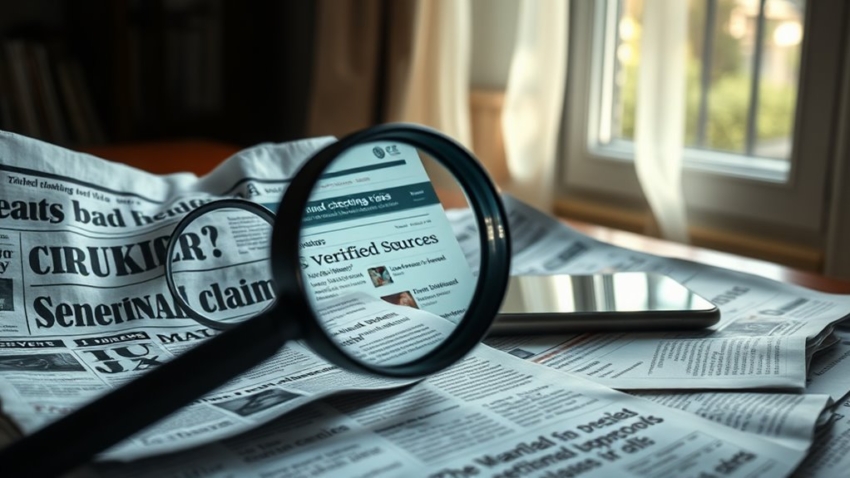
Why Fact-Checking Is Crucial in the Fight Against Misinformation
Fact-checking is essential in the fight against misinformation as it provides verification of claims amidst rampant digital misinformation. This process helps rebuild public trust in institutions and media by ensuring accountability for disseminated information. As misinformation erodes social cohesion and public engagement, fact-checking organizations play a significant role in educating the public on identifying false narratives. Tools such as online databases and image verification improve the accuracy of shared content. By cultivating a culture of transparency and responsible journalism, fact-checking empowers individuals to discern truth from falsehood, revealing deeper insights into this pressing issue.
The Rise of Misinformation
As the digital environment has evolved, so too has the proliferation of misinformation, which poses significant challenges to public discourse and informed decision-making. The rise of social media platforms has transformed how information is disseminated and consumed, leading to an atmosphere characterized by rapid sharing and, often, a lack of verification. This shift has enabled misinformation to spread more quickly than ever, creating an urgent need for effective strategies to combat its impact.
Social media influence plays an essential role in this phenomenon. With billions of users engaging daily, these platforms facilitate the viral spread of misleading information, often outpacing fact-checking efforts. The algorithms that govern content visibility frequently prioritize engagement over accuracy, further amplifying false narratives. As a result, users are inundated with vast amounts of information, leading to a phenomenon known as information overload. This deluge can overwhelm individuals, making it challenging to discern credible sources from dubious ones.
In this chaotic environment, the responsibility of verifying information increasingly falls on the individual, yet many lack the necessary skills to critically assess sources. The ramifications of misinformation are profound, affecting everything from health decisions to electoral outcomes. Thus, addressing the rise of misinformation necessitates a concerted effort to promote media literacy and critical thinking among the public, alongside the development of robust fact-checking mechanisms. By nurturing a more informed citizenry, society can mitigate the adverse effects of misinformation and improve the quality of public discourse.
Impact on Public Perception
The pervasive spread of misinformation greatly shapes public perception, often distorting reality and influencing individuals' beliefs and behaviors. As false narratives proliferate, they undermine public trust in institutions, media, and even scientific expertise. This erosion of trust creates an environment where misinformation can thrive, leading individuals to question credible sources as they elevate dubious claims.
Understanding the impact of misinformation on public perception can be summarized as follows:
| Aspect | Effect of Misinformation | Consequences |
|---|---|---|
| Public Trust | Decreased trust in factual reporting | Individuals may rely on unreliable sources. |
| Belief Formation | Altered beliefs based on false information | Polarization of opinions among the populace. |
| Behavioral Changes | Actions driven by misinformed beliefs | Public health crises exacerbated by misinformation (e.g., vaccine hesitancy). |
| Social Cohesion | Increased division and conflict | Erosion of community bonds and dialogue. |
| Civic Engagement | Reduced participation in democratic processes | Apathy towards voting and civic responsibilities. |
In this complex environment, individuals often gravitate in the direction of information that confirms pre-existing biases, further complicating the quest for truth. The cycle of misinformation spread not solely misguides personal opinions but has a ripple effect, influencing societal norms and expectations. Addressing these issues requires a concerted effort to restore public trust and promote critical engagement with information, emphasizing the importance of accurate and reliable sources in shaping a well-informed citizenry.
Role of Fact-Checking Organizations
Fact-checking organizations play a crucial role in countering the effects of misinformation by rigorously verifying claims and providing accurate information to the public. These organizations operate as independent entities dedicated to enhancing the reliability of information disseminated across various platforms. By conducting thorough investigations and employing systematic approaches to validate statements, they contribute considerably to the credibility assessment of information.
The importance of fact-checking organizations can be highlighted through the following aspects:
- Public Trust: By providing reliable information, these organizations help rebuild public confidence in credible sources, countering the erosion caused by rampant misinformation.
- Accountability: They hold public figures, media outlets, and organizations accountable for their statements, ensuring that false claims are identified and corrected.
- Education: Fact-checking organizations not merely verify claims but additionally educate the public on identifying misinformation, thereby nurturing a more informed citizenry.
In a world inundated with information, the role of fact-checking organizations is indispensable. They serve as a beacon of accuracy, guiding individuals toward reliable information and empowering them to make informed decisions. As misinformation continues to evolve, the commitment of these organizations to uphold truth and accountability remains crucial in preserving the integrity of public discourse. Their work not only aids in immediate corrections but also contributes to long-term societal comprehension of the importance of fact verification.
Tools and Techniques for Fact-Checking
In addressing the challenges posed by misinformation, a variety of tools and techniques have emerged to improve the effectiveness of fact-checking efforts. These resources are vital for verifying claims and ensuring that accurate information prevails in public discourse.
One primary category of fact checking tools includes online databases and search engines designed for fact-checking purposes. Websites like Snopes, FactCheck.org, and PolitiFact allow users to quickly access verified information on a wide range of topics. These platforms often provide a thorough analysis of claims, detailing their sources and the context surrounding them.
In addition to these platforms, verification techniques play a significant role in the fact-checking process. For instance, reverse image search tools, such as Google Images and TinEye, help identify the origins of images and determine their authenticity. Similarly, metadata analysis can provide insights into when and where a photograph was taken, contributing to a more detailed verification process.
Social media monitoring tools are invaluable, as they help fact-checkers track the spread of misinformation across various platforms. These tools can analyze engagement metrics, enabling fact-checkers to prioritize which claims require immediate attention.
Building a Culture of Accountability
As misinformation continues to proliferate in the digital age, cultivating a culture of accountability among individuals, organizations, and platforms is essential for effective communication. This culture can considerably mitigate the spread of false information and improve trust in the media. Accountability frameworks play an important role in establishing clear responsibilities for content creation, dissemination, and correction. These frameworks empower journalists and media outlets to adhere to ethical standards, promoting an environment of responsible journalism.
Key components of a robust culture of accountability include:
- Transparency in sourcing: Organizations must disclose their sources and methodologies to allow audiences to evaluate the credibility of information.
- Public engagement: Encouraging dialogue between journalists and the public can help identify misinformation and improve the collective comprehension of critical issues.
- Mechanisms for correction: Establishing clear procedures for correcting misinformation guarantees that errors are acknowledged and rectified without delay, reinforcing trust.
Frequently Asked Questions
How Can Individuals Fact-Check Information Effectively on Their Own?
Individuals can effectively fact-check information by employing critical thinking and source evaluation. Start by evaluating the credibility of the source, checking for author expertise, and verifying publication date. Cross-reference claims with reliable sources, such as academic journals and reputable news outlets. Furthermore, consider the context and potential biases inherent in the information. By systematically analyzing these elements, individuals can discern factual accuracy and make informed conclusions about the information they encounter.
What Are Common Signs of Misinformation to Look Out For?
Common signs of misinformation include sensational headlines designed to provoke strong emotional reactions and content that lacks credible sources. Furthermore, information may be presented without proper attribution or rely heavily on anecdotal evidence. Be cautious of articles that evoke urgency, as they often prioritize clickbait over factual accuracy. Evaluating the credibility of the sources cited and cross-referencing with reputable outlets can greatly aid in identifying and mitigating the spread of misinformation.
Are There Specific Websites Recommended for Fact-Checking?
There are several reputable fact-checking websites that serve as reliable resources for verifying information. Notable examples include Snopes, FactCheck.org, and PolitiFact, each offering thorough analyses of claims and news stories. These platforms utilize a systematic approach to evaluate the accuracy of statements and provide context, thereby helping users discern truth from misinformation. Engaging with these fact-checking websites can considerably improve one's ability to navigate the intricacies of information in today's digital environment.
How Do Algorithms Contribute to the Spread of Misinformation?
In the digital age, algorithms often act as double-edged swords. Algorithm bias can skew content delivery, amplifying sensationalized or misleading information during the inundation of users in information overload. These algorithms prioritize engagement, leading to the rapid spread of misinformation as users are exposed to extremes rather than balanced perspectives. As a result, the unchecked influence of algorithmic design exacerbates the challenges of discerning fact from fiction, complicating our ability to navigate the modern information terrain effectively.
What Role Do Social Media Platforms Play in Combating Misinformation?
Social media platforms play a pivotal role in combating misinformation by exercising social media's responsibility to guarantee accurate content dissemination. This includes implementing robust fact-checking measures, algorithm adjustments, and user education campaigns. Additionally, platform accountability is crucial; companies must actively monitor and address false information to cultivate a trustworthy environment. By prioritizing accuracy and transparency, social media platforms can markedly reduce the spread of misinformation, ultimately enhancing the integrity of online discourse.