
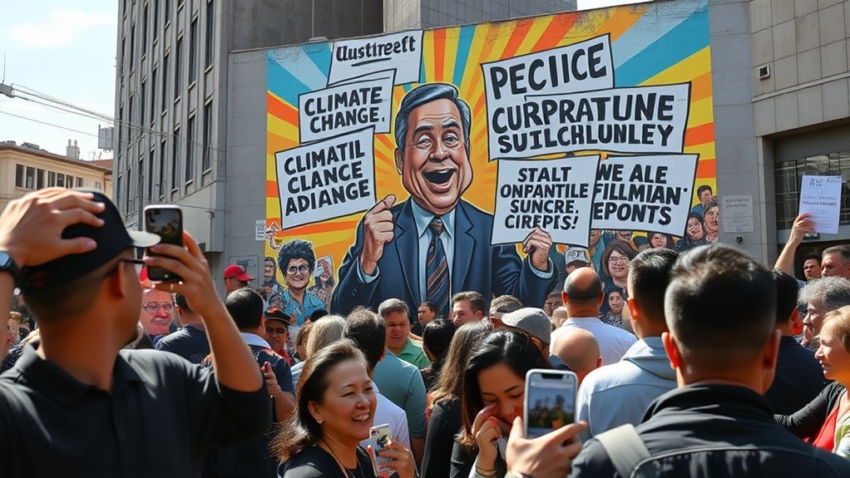
The Role of Satire in Highlighting Important News Issues
Satire plays an essential role in highlighting important news issues by utilizing humor and irony to expose societal flaws. It critiques political absurdities and encourages audiences to engage critically with current events. By framing complex topics in an accessible manner, satire nurtures public discourse and promotes media literacy. Programs like "The Daily Show" and "Saturday Night Live" exemplify this impact, challenging authority as they appeal to wider audiences. Nonetheless, the balance between entertainment and truthful representation is imperative. As satire continues to evolve with technology, its influence on activism and social critique remains significant, presenting a rich environment to explore further.
Definition of Satire
Satire, a powerful literary and artistic form, serves to critique and expose societal flaws through humor and irony. This multifaceted technique employs various satire techniques and comedic devices to illuminate the absurdities and injustices present in human behavior, politics, and culture. By exaggerating or distorting reality, satirical works encourage audiences to reflect critically on the subjects being addressed, often prompting a reevaluation of entrenched beliefs and norms.
One of the most effective satire techniques is exaggeration, where the qualities of a person or situation are amplified to the point of absurdity. This not only highlights the ridiculous nature of the subject but additionally engages the audience's sense of humor. Irony, another common device, involves a stark contrast between expectations and reality, allowing the satirist to underscore hypocrisy and contradictions within societal practices. Through the use of parody, satirists mimic the style of specific genres or individuals, creating a humorous commentary that resonates with the audience.
Moreover, the use of wit and wordplay adds layers of meaning to satirical works. Comedic devices such as puns or clever turns of phrase can provide an entertaining yet thought-provoking experience for the audience. Ultimately, satire is not merely for amusement; it serves as an important tool for social commentary, encouraging discourse on pressing issues and driving change in public attitudes. By combining humor with critical analysis, satire remains a fundamental component of contemporary discourse, nurturing awareness and comprehension of complex societal dynamics.
Historical Context of Satire
Satire has a rich historical context that traces back to ancient civilizations, where it served as a tool for social commentary and critique. Its role in political discourse has evolved considerably, reflecting the changing dynamics of influence and public opinion throughout history. As media forms have transformed, so too has the expression of satire, adapting to new technologies and cultural contexts during the process of maintaining its core function of challenging authority.
Origins of Satirical Writing
Humor has long served as a potent tool for social commentary, with roots tracing back to ancient civilizations. The ancient origins of satire can be traced to works such as Aristophanes' comedies in ancient Greece, which employed humor to critique societal norms and political figures. Similarly, Roman playwrights like Plautus and Terence utilized comedic narratives to expose the follies and vices of their time, demonstrating the enduring nature of satire as a reflective art form.
As literary evolution progressed through the Middle Ages and into the Renaissance, satire adapted to various cultural contexts. Writers such as Geoffrey Chaucer and Jonathan Swift employed wit and irony to address moral and ethical concerns, highlighting the discrepancies between societal ideals and actual behavior. This adaptability has allowed satire to flourish across different genres, from literature to theatrical performances.
In contemporary society, the foundations laid by these early satirists remain crucial, as modern satirical writing continues to challenge authority and provoke thought. By comprehending the historical context of satire, we gain insight into its significance as a tool for highlighting important news issues, reinforcing its role as a fundamental element of discourse throughout the ages.
Satire in Political Discourse
The evolution of satire has profoundly influenced political discourse throughout history, reflecting societal attitudes toward governance and authority. From ancient Greece to contemporary society, satirical techniques have served as influential tools for critiquing political figures and policies. Satire often employs humor to expose hypocrisy, corruption, and incompetence within political systems, making complex issues more accessible to the public.
Key aspects of satire in political discourse include:
- Amplification of Absurdity: By exaggerating political events or statements, satire underscores the irrationality of certain actions.
- Subversion of Authority: Satirical humor often challenges established control structures, encouraging critical thinking among citizens.
- Cultural Reflection: Satire mirrors the zeitgeist, providing insight into societal values and concerns regarding governance.
Through its use of political humor, satire not merely entertains but also educates, promoting engagement with critical issues. By highlighting the flaws within political discourse, satirical commentary encourages a more informed populace, eventually promoting accountability and transparency in governance. As history demonstrates, satire remains a fundamental element in the realm of political dialogue, enabling citizens to question authority and demand change.
Evolution Through Media Forms
As communication methods have evolved, so too has the expression of satire, adapting to the technological and cultural contexts of each era. The satire evolution can be traced from ancient forms, such as Greek theatre and Roman literature, where playwrights used humor to critique societal norms and political leaders. With the advent of the printing press, satirical pamphlets became a popular medium, allowing for rapid dissemination of pointed commentary on social issues.
The 20th century witnessed significant media transformation, particularly with the rise of radio and television. Programs like "Saturday Night Live" and "The Daily Show" utilized these platforms to reach broader audiences, blending entertainment with political critique. In the digital age, social media has further reshaped satire, enabling instantaneous sharing and engagement. Platforms like Twitter and TikTok facilitate the creation and circulation of satirical content, often responding to current events in real time.
This evolution underscores satire's enduring role as an essential tool for social commentary, reflecting and shaping public discourse. As media continues to transform, so too will satire, remaining an influential force in highlighting important news issues and encouraging critical thought.
Satire vs. Serious Journalism
The distinction between satire and serious journalism plays a vital role in shaping public perception of news issues. Whereas serious journalism aims to inform through factual reporting, satire engages audiences by using humor to highlight societal flaws and provoke critical thought. This interplay raises important questions about how humor can balance informative content and influence public discourse.
#
Impact on Public Perception
How does satire shape public perception as opposed to serious journalism? The impact of humor in satire often provides a unique lens through which audiences can engage with critical issues. Whereas serious journalism prioritizes factual reporting and in-depth analysis, satire utilizes wit to provoke thought and challenge established narratives. This approach can greatly influence public opinion by making complex subjects more accessible and relatable.
- Engagement: Satirical content tends to capture attention more effectively, drawing in audiences who might overlook traditional news.
- Critical Reflection: Humor encourages viewers to reflect critically on societal norms and political issues, often leading to deeper discussions.
- Memorable Messaging: The comedic elements in satire can make key messages more memorable, ensuring they resonate within public discourse.
In contrast, serious journalism serves as a cornerstone for informed discussion, providing the groundwork upon which public opinion is built. Although both forms contribute to comprehension of news issues, satire's humor impact can create a distinct space for dialogue, eventually shaping public perception in ways that conventional reporting may not achieve.
Engagement Through Humor
Even though serious journalism plays a critical role in informing the public, satire captures engagement through its ability to blend humor with commentary. This unique approach not just entertains but additionally provokes thought, inviting audiences to reflect on pressing issues in a way that traditional reporting may not achieve. The use of humor in satire serves as a tool for engagement, making complex topics more accessible and relatable.
Comedic critique often highlights the absurdities within political and social systems, encouraging audiences to question the status quo. By presenting serious topics through a humorous lens, satire can break down barriers that may hinder public discourse, encouraging a deeper comprehension of issues that impact society. This method of engagement allows individuals to process information with a lighter heart, reducing the emotional weight often associated with serious news.
Moreover, satire can create a community among viewers, as shared laughter leads to discussions and reflections on the issues presented. In the end, the fusion of humor and critique not just entertains but additionally empowers audiences, igniting conversations that are crucial for a well-informed public. In this way, satire complements serious journalism, driving engagement and promoting critical thinking.
Balancing Facts With Comedy
Whereas satire effectively engages audiences through humor, it faces the challenge of balancing factual accuracy with comedic expression. The delicate interplay between comedy and journalism necessitates a careful approach, as misrepresentation can undermine both the credibility of the satire and the seriousness of the issues being addressed. Comedic timing plays a vital role in ensuring that humor resonates without distorting the truth.
Satirical content should aim to:
- Highlight key issues whilst maintaining respect for the subject matter.
- Engage audiences in a way that provokes thought rather than simply entertaining.
- Encourage dialogue about important topics without alienating viewers.
Audience reception is pivotal; if the comedic elements overshadow the facts, the satire risks becoming mere entertainment devoid of substance. This balance is essential, as a well-crafted satirical piece can amplify awareness and inspire action. Nonetheless, if facts are misrepresented for comedic effect, it can lead to misinformation, ultimately hindering the very discourse it seeks to promote. Therefore, the effective use of satire in journalism lies in its ability to draw attention to pressing issues while maintaining a firm grounding in reality.
## Impact on Public Perception
In what ways does satire shape public perception of news issues? Satire serves as a unique lens through which audiences can examine current events, often exaggerating or distorting reality to provoke thought and reflection. This form of commentary can greatly influence public opinion by framing issues in a manner that highlights absurdities, contradictions, or injustices within the news narrative. Through humor, satire can engage audiences who might otherwise disengage from serious discussions, thereby promoting a deeper comprehension of complex topics.
Moreover, satire can improve media literacy by encouraging individuals to critically evaluate information sources. By presenting news in a humorous context, satirical content prompts viewers to question the validity of mainstream narratives and the motives behind them. As people consume satirical content, they often become more discerning consumers of news, developing the skills necessary to distinguish between credible journalism and sensationalism.
However, the impact of satire on public perception is not without its challenges. Misinterpretations can arise; audiences may take satirical content literally, leading to misconceptions about the issues at hand. Furthermore, the effectiveness of satire may vary based on individual backgrounds and experiences, potentially reinforcing existing biases rather than challenging them.
Examples of Effective Satire
Satire has proven to be an effective tool in shaping public discourse, with numerous examples illustrating its impact on societal issues. Through cultural commentary and humorous critique, satirical works often highlight critical topics, encouraging audiences to reflect and engage with pressing matters.
Notable examples of effective satire include:
- "The Onion": This satirical news outlet cleverly distills complex issues into digestible articles, often exposing the absurdities of contemporary life. By presenting exaggerated scenarios, it forces readers to confront uncomfortable truths about society and politics.
- "Saturday Night Live": The long-running sketch comedy show utilizes satire to comment on current events and cultural phenomena. Its parodies of political figures and social trends spark conversation, prompting viewers to think critically about the issues at hand.
- "Jon Stewart's The Daily Show": As a pioneering platform for satirical news, Stewart's approach blended humor with serious journalism, effectively addressing topics like war, politics, and media bias. His unique style made complex issues accessible, encouraging audiences to engage in meaningful discussions.
These examples showcase how satire not merely entertains but additionally serves as a formidable medium for cultural commentary. By using humor to critique societal norms, satirists challenge audiences to confront uncomfortable realities, in the end nurturing greater awareness and dialogue surrounding important news issues.
Satire and Political Commentary
Even though often dismissed as mere entertainment, satire plays a crucial role in political commentary by providing sharp critiques of authority structures and policies. Through the lens of humor, political satire draws attention to the absurdities and contradictions inherent in government actions, societal norms, and media narratives. Comedic critique enables audiences to digest complex political issues in an accessible manner, making it easier to engage with important topics that might otherwise seem intimidating.
Satirists like Jon Stewart, John Oliver, and Stephen Colbert have become influential voices in shaping public discourse. Their programs skillfully blend humor with factual reporting, exposing hypocrisy and encouraging critical thinking among viewers. By employing irony, exaggeration, and parody, they illuminate the shortcomings of political figures and institutions, often prompting audiences to reconsider their own beliefs and assumptions.
Moreover, political satire serves as a vehicle for marginalized voices, allowing them to challenge dominant narratives and question the status quo. In this way, it nurtures a more inclusive dialogue around pressing issues, empowering citizens to voice their concerns and demand accountability from those in authority.
In essence, satire is not merely a form of entertainment but a crucial tool for political engagement. It encourages audiences to reflect on their own roles within the political environment while questioning the motivations of those who govern. Accordingly, political satire remains an influential force in shaping public opinion and driving social change.
The Role of Social Media
The influence of social media on political discourse has transformed how satire is disseminated and consumed. Platforms like Twitter, Facebook, and Instagram serve as potent tools for satirists, allowing them to reach vast audiences instantly. This democratization of content creation has led to the rise of viral satire, where jokes and parodies can spread swiftly, capturing public attention and driving conversations around significant news issues.
Key factors that highlight the role of social media in satire include:
- Immediate Feedback: Social media allows satirists to gauge audience reactions in real-time, enabling them to adapt their content based on public sentiment.
- Wider Reach: Unlike traditional media, social media platforms can amplify messages beyond geographic and demographic barriers, allowing satire to resonate with diverse groups.
- Engagement and Interaction: Social media cultivates a two-way conversation where audiences can engage with satirical content, share it, and create their own interpretations, further enriching the discourse.
As a result of this social media influence, satire has become a crucial element in shaping public opinion and sparking critical discussions on pressing issues. The immediacy and accessibility of viral satire guarantee that important news topics remain at the forefront of public consciousness. In this way, social media not only acts as a distribution channel but likewise as a catalyst for deeper engagement, making satire a fundamental aspect of contemporary political dialogue.
Satirical Shows and Their Influence
How do satirical shows shape public perception and influence political discourse? These programs serve as a potent medium for conveying complex issues through engaging satirical narratives that resonate with audiences. By employing comedic timing, satirical shows can distill intricate political matters into digestible segments, making them more accessible to viewers who may otherwise be disengaged from traditional news sources.
The humor embedded in satire encourages audiences to reflect critically on current events, often highlighting absurdities in political behavior and media reporting. For instance, satirical news programs like "The Daily Show" and "Saturday Night Live" not just entertain but also inform, providing commentary that prompts viewers to question mainstream narratives. This dual role can lead to increased awareness and mobilization around pressing societal issues.
Moreover, satirical shows often act as a counterbalance to political propaganda by exposing inconsistencies and hypocrisy within political discourse. Their unique blend of humor and critique enables them to tackle sensitive topics with a lighthearted approach, appealing to a wide demographic that spans various age groups and political affiliations.
In this way, the influence of satirical shows extends beyond mere entertainment; they are instrumental in shaping public dialogue and nurturing critical thinking. By challenging the status quo and encouraging discourse, these programs contribute greatly to a more informed and engaged citizenry, reinforcing the importance of satire in contemporary media environments.
Ethical Considerations in Satire
Although satire serves as a powerful tool for commentary and critique, it likewise raises significant ethical considerations that warrant careful examination. The ability of satire to provoke thought and spark conversations comes with the responsibility to navigate the ethical boundaries inherent in the genre. Key issues arise regarding the potential for misinformation, the risk of reinforcing stereotypes, and the impact on vulnerable populations.
Consider the following ethical considerations:
- Truthfulness: While satire often exaggerates for effect, it must remain rooted in truth to avoid misleading the audience. Misrepresentation can lead to misunderstandings of serious issues.
- Respect for Individuals: Satire should be cautious not to unfairly target specific individuals or groups, particularly those already marginalized. This respect is fundamental for maintaining ethical integrity.
- Audience Responsibility: Audiences must engage critically with satirical content, discerning the difference between humor and genuine news. This responsibility is important in an age where misinformation can spread swiftly.
Navigating these ethical considerations is important for satirists who aim to contribute meaningfully to public discourse. They must balance the desire to entertain with the obligation to inform responsibly. In the end, the effectiveness of satire in highlighting significant news issues relies not just on the satirist's skill but also on the audience's ability to engage thoughtfully with the content presented. In nurturing a culture of critical engagement, both creators and consumers of satire can uphold ethical standards while stimulating significant discussions about pressing societal issues.
Satire's Effect on Activism
Even though satire often entertains, it similarly serves as a catalyst for activism by highlighting social injustices and mobilizing public sentiment. Through a combination of humor and sharp critique, satirical works can illuminate issues that may otherwise be overlooked or ignored. The satire impact is particularly potent in its ability to evoke emotional responses, prompting individuals to re-evaluate their perspectives and encouraging a collective call to action.
Satirical commentary can dismantle complex topics, making them more accessible to a broader audience. By simplifying nuanced issues, satire not only raises awareness but additionally nurtures activism motivation among viewers or readers. For instance, satirical television shows and online platforms frequently address political corruption, climate change, and social inequality, translating these critical issues into relatable narratives that resonate with everyday people. This approach encourages dialogue and inspires individuals to engage in advocacy or community organizing.
Moreover, satire often targets those in authority, holding them accountable in ways that traditional journalism may not. By exposing hypocrisy and absurdity, satirical content can galvanize public anger and frustration, motivating audiences to demand change. The unique blend of humor and critique makes satire a fundamental tool for social movements, as it can unify diverse groups around a common cause.
Challenges Facing Satirists Today
As satire continues to play an essential role in shaping public discourse, satirists today face significant challenges that threaten their effectiveness and reach. The terrain of media and communication has evolved, presenting new hurdles that satirists must traverse to engage their audiences meaningfully.
Key challenges include:
- Censorship challenges: Increasingly, satirists encounter restrictions imposed by governments, corporations, or platforms that seek to limit critical voices. This censorship can stifle creativity and dilute the potency of satire as a tool for social commentary.
- Audience reception: With the rise of polarized opinions and fragmented media consumption, satirists must grapple with how their work is perceived. Misunderstandings or misinterpretations can lead to backlash, diminishing the impact of their messages.
- Digital platforms: The shift to digital media has altered the traditional terrain of satire. Algorithms often prioritize sensational content, making it difficult for nuanced satire to gain visibility, thereby affecting its reach and influence.
These challenges necessitate a thoughtful approach from satirists as they endeavor to maintain relevance and efficacy in a complex media environment. Traversing censorship while nurturing audience engagement requires innovative strategies and a sharp comprehension of the evolving dynamics of public discourse. As they confront these obstacles, satirists must remain resilient, adapting to guarantee their voices continue to contribute to important conversations in society.
Future of Satire in Media
How will satire evolve in an increasingly complex media environment? The future of satire is poised to embrace several transformative trends that will redefine its role and accessibility. As digital satire continues to gain traction, platforms for expression will expand, allowing for diverse satire genres that cater to varied satire audiences. These changes are crucial for engaging global perspectives, enabling satirists to address issues that resonate across cultural boundaries.
Interactive satire is emerging as a significant trend, encouraging audience participation and nurturing a more dynamic dialogue about pressing issues. This form of satire not only entertains but additionally educates, promoting critical thinking in a way that traditional formats may not achieve. Educational satire will likely grow, providing insights into complex subjects during the process of maintaining humor.
The following table summarizes key future trends in satire:
| Trend | Description |
|---|---|
| Digital Satire | Increased use of online platforms for satirical content. |
| Interactive Satire | Audience participation through social media and engagement. |
| Global Perspectives | Addressing international issues and cultural nuances. |
| Satire Accessibility | Making satire more available to diverse audiences. |
| Educational Satire | Using humor as a tool for learning and awareness. |
Frequently Asked Questions
How Can Satire Foster Critical Thinking Among Audiences?
Research indicates that individuals exposed to satirical content are 24% more likely to engage in critical thinking regarding societal issues. Satire employs humor analysis and critique techniques to dissect complex topics, prompting audiences to question mainstream narratives. By presenting information in an entertaining yet thought-provoking manner, satire encourages deeper contemplation and dialogue among viewers. This unique approach not only promotes awareness but also nurtures a more discerning public, capable of traversing diverse viewpoints.
Does Satire Have a Universal Appeal Across Cultures?
Satire does not possess universal appeal across cultures, as its effectiveness is deeply rooted in cultural context. Different societies have varied humor perceptions, shaped by historical, social, and political factors. What may resonate as humorous in one culture can be perceived as offensive or irrelevant in another. As a result, the appreciation of satire often requires a comprehension of specific cultural nuances, making it a complex tool for communication and critique in a globalized world.
What Skills Are Essential for Effective Satirical Writing?
Although some may argue that satire is merely humor, effective satirical writing demands a nuanced skill set. Important abilities include the development of sharp wit, allowing the writer to convey complex ideas succinctly. Furthermore, mastery of irony usage is critical, as it enables the satirist to critique societal issues subtly yet forcefully. A strong comprehension of context and audience is likewise significant, ensuring the message resonates and provokes thoughtful reflection.
How Do Audiences Differentiate Between Satire and Misinformation?
Audiences differentiate between satire and misinformation through a combination of satire perception and misinformation detection skills. Critical thinking and media literacy enable individuals to recognize the exaggerated humor inherent in satire, whereas comprehension of context and intention helps distinguish it from deceptive content. Furthermore, familiarity with reputable sources and the ability to analyze the tone and style of a piece contribute to an informed audience's capacity to identify satire, thereby reducing susceptibility to misinformation.
Can Satire Influence Policy Changes or Government Actions?
Satire, with its sharp wit and lively imagery, serves as a mirror reflecting societal flaws and government shortcomings. This satirical impact can resonate deeply with audiences, creating a compelling narrative that captures public attention. Such engagement often catalyzes discourse, prompting policymakers to reconsider their stances. As a result, the humorous yet poignant critique can wield significant policy influence, urging legislative bodies to address issues that may have otherwise lingered in the shadows of indifference.