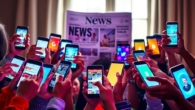

Why Media Literacy Is a Vital Skill in Today’s World
Media literacy is a critical skill for individuals maneuvering today's information-rich environment. With the rise of social media, misinformation spreads swiftly, complicating the task of identifying credible sources. Media literacy encourages critical thinking, enabling users to evaluate information, examine biases, and discern fact from fiction. It equips students and citizens with the tools to make informed decisions, enhancing civic engagement and accountability. As misinformation challenges public comprehension, a solid foundation in media literacy becomes vital. Exploring further will reveal more about its role in shaping informed communities in our increasingly complex digital terrain.
Understanding Media Literacy
Media literacy is a fundamental competency in the digital age, enabling individuals to critically analyze and evaluate the vast array of information presented through various channels. As media continues to evolve, the ability to discern credible sources from unreliable ones becomes increasingly important. This skill set, often intertwined with digital literacy, empowers individuals to navigate a complex environment filled with diverse media formats, including social media, news outlets, and blogs.
Understanding media literacy involves recognizing the context and intent behind the information presented. It requires an awareness of media ethics, which encompasses the principles that guide the creation and dissemination of content. Ethical considerations play a significant role in shaping how information is produced and consumed. An ethically responsible media environment not just cultivates trust but encourages accountability among creators and consumers alike.
Moreover, media literacy promotes critical thinking, urging individuals to question assumptions and consider multiple perspectives. This reflective approach is essential in a society where misinformation can spread swiftly and have significant consequences. By developing media literacy skills, individuals become more discerning consumers of information, equipped to challenge biases and advocate for integrity in media practices.
The Rise of Misinformation
The rise of misinformation is greatly influenced by social media, where rapid sharing often outpaces fact-checking. As news consumption habits evolve, many individuals find themselves relying on these platforms for information, which can lead to the spread of false narratives. Comprehending the implications of this trend is essential for cultivating a well-informed public.
Social Media's Impact
How has social media transformed the terrain of information dissemination? Social media platforms have fundamentally altered how information is shared and consumed, often leading to the rapid spread of misinformation. With the sophistication of social media algorithms, content is customized to individual users, shaping their digital identity and influencing their perceptions.
Consider these key impacts:
- Speed of Information: News travels faster on social media than traditional media, often bypassing fact-checking processes.
- Echo Chambers: Algorithms create environments where users are exposed primarily to viewpoints that reinforce their existing beliefs, limiting diverse perspectives.
- User-Generated Content: Anyone can be a content creator, which democratizes information but in addition dilutes accountability.
- Viral Misinformation: False information can go viral, reaching millions before corrections are made, complicating efforts to combat misinformation.
The consequences of these dynamics are profound, necessitating a robust comprehension of media literacy. As individuals navigate their digital identities, they must develop critical skills to discern fact from fiction, ensuring they are not unwittingly contributing to the misinformation epidemic.
News Consumption Habits
Where do individuals turn for news in an era dominated by misinformation? As traditional news sources face competition from social media and online platforms, many people are increasingly relying on these channels for their information. This shift in news preferences has led to a significant rise in information overload, where consumers are bombarded with a vast array of content, making it challenging to discern credible sources from unreliable ones.
The proliferation of misinformation, particularly on social media, exacerbates this issue. Algorithms often prioritize sensational or misleading content, drawing users into echo chambers that reinforce existing beliefs rather than presenting balanced viewpoints. As a result, individuals may find themselves consuming news that aligns with their biases, further complicating their comprehension of complex issues.
To navigate this terrain, media literacy becomes essential. Developing critical thinking skills allows individuals to assess the credibility of sources, question the validity of information, and seek out diverse perspectives. By grasping their own news preferences and being aware of the pitfalls of information overload, consumers can make informed choices that empower them in their news consumption habits, encouraging a more informed society.
Critical Thinking Skills
Critical thinking skills are essential in navigating the intricate terrain of information that characterizes today's media environment. With the constant influx of data, opinions, and narratives, individuals must develop the ability to engage in critical analysis and logical reasoning. These skills empower people to discern the quality and reliability of the information they encounter, ensuring they make informed decisions.
To improve critical thinking in media literacy, consider the following strategies:
- Question Assumptions: Challenge the underlying beliefs that shape the presented information. Rather than accepting claims at face value, ask whether they are supported by credible evidence.
- Evaluate Evidence: Scrutinize the sources of information. Determine whether the evidence presented is reliable, relevant, and sufficient to support the conclusions drawn.
- Recognize Bias: Acknowledge personal biases and the potential biases of others. Grasping these influences can help in evaluating the objectivity of the information.
- Draw Logical Conclusions: Use logical reasoning to connect the dots between various pieces of information. This approach aids in forming coherent arguments and comprehending the implications of the information.
Analyzing Sources Effectively
Effective analysis of sources is essential for steering through today's intricate media environment. This involves identifying credible sources, evaluating potential bias and perspective, and cross-referencing information to guarantee accuracy. By honing these skills, individuals can better discern reliable information from misleading content.
Identifying Credible Sources
In an era inundated with information, distinguishing credible sources from unreliable ones is vital for informed decision-making. To navigate this complex environment, individuals must employ effective fact-checking techniques and source verification methods. Here are four fundamental strategies to identify credible sources:
- Check the Author's Credentials: Investigate the qualifications and expertise of the author in the relevant field. A credible author typically has a background that aligns with the topic discussed.
- Examine the Publication: Evaluate the reputation of the publication. Established, peer-reviewed journals and reputable news organizations are more likely to provide reliable information.
- Review Citations and References: Credible sources should cite their information. Check the references provided to verify they come from authoritative and trustworthy origins.
- Assess the Date of Publication: Timeliness matters. Information can quickly become outdated, particularly in fast-evolving fields. Confirm the source is recent enough to be relevant.
Evaluating Bias and Perspective
How can one discern the biases that shape the information presented in various sources? Evaluating bias and perspective is vital in comprehending media influence. Bias can manifest in language, tone, and the selection of facts, often reflecting the source's agenda or viewpoint. Recognizing these biases requires a critical eye and an awareness of cognitive biases that might cloud our judgment. For instance, confirmation bias leads individuals to favor information that aligns with their pre-existing beliefs, which can distort one's comprehension of an issue.
To effectively analyze sources, one should consider the author's background, the outlet's reputation, and the context in which the information is presented. Questions such as, "What evidence is provided?" and "Whose voices are included or excluded?" can reveal underlying biases. Additionally, it is fundamental to differentiate between objective reporting and opinion-based content. By actively engaging with various perspectives, individuals can develop a nuanced comprehension of intricate issues, eventually empowering them to make informed decisions. In today's information-saturated environment, cultivating the skill of evaluating bias not solely improves critical thinking but also encourages a more discerning audience capable of maneuvering the challenges of media influence.
Cross-Referencing Information Sources
Evaluating bias and perspective provides a foundational grasp necessary for the next step in analyzing information: cross-referencing sources. This process improves source reliability and guarantees a well-rounded comprehension of the topic at hand. Employing effective cross-referencing techniques is crucial for discerning fact from fiction in the digital age.
Here are four key strategies to improve your cross-referencing skills:
- Check Multiple Sources: Verify information by consulting various sources. If a claim is corroborated across reputable outlets, its credibility increases.
- Assess Author Credentials: Investigate the qualifications and background of the authors. Experts in the field typically provide more reliable insights.
- Evaluate Publication Date: Confirm that the information is current and relevant. Outdated data can mislead readers and distort comprehension.
- Look for Citations: Reliable sources usually reference their data. Investigating these citations can lead to original studies or verified facts.
Recognizing Bias and Perspective
Why is it important to recognize bias and perspective in the media we consume? In an era dominated by information overload, the ability to discern bias is fundamental for informed decision-making. Media outlets often present information through the lens of their own cognitive biases, influencing how stories are told and received. These biases can manifest in various forms, such as selective reporting, sensationalism, or framing issues in a particular light.
Comprehending personal perspectives is significant in this situation. Each journalist, editor, and media organization has a unique viewpoint shaped by cultural, ideological, and economic factors. Recognizing these perspectives enables consumers to critically evaluate the information presented, allowing them to identify potential slants that may distort the truth. For example, two articles covering the same event may highlight different aspects, leading readers to form contrasting opinions based on incomplete narratives.
Moreover, when individuals are aware of their own cognitive biases, they can approach media consumption more critically. This self-awareness cultivates an environment where questioning and analysis become second nature. By engaging with media thoughtfully, consumers can challenge their assumptions and broaden their comprehension of complex issues.
Impact on Personal Decisions
The recognition of bias and perspective in media consumption directly influences personal decision-making. As individuals increasingly rely on various media sources for information, comprehension of how these sources shape narratives becomes fundamental. This awareness allows for more informed beliefs, ultimately guiding personal choices in a complex world.
Consider the following key impacts of media literacy on personal decisions:
- Critical Evaluation of Information: Media literacy equips individuals to assess the credibility of sources, enabling them to discern fact from opinion. This critical approach cultivates informed beliefs that are fundamental for making sound personal choices.
- Awareness of Manipulative Techniques: Recognizing persuasive tactics, such as emotional appeals or selective storytelling, allows individuals to guard against manipulation. This awareness empowers them to resist pressure and make decisions aligned with their values.
- Diverse Perspectives: Engaging with varied media outlets can broaden comprehension and challenge preconceived notions. This exposure encourages personal choices that are more inclusive and reflective of a wider spectrum of ideas.
- Informed Civic Participation: Media literacy informs individuals about societal issues, leading to more thoughtful participation in civic matters. This informed engagement contributes to stronger communities, as personal choices are made with a greater sense of responsibility.
Media Literacy in Education
In today's educational environment, nearly 90% of educators recognize the importance of integrating media literacy into curricula. This acknowledgment stems from the necessity of equipping students with the skills to critically analyze and navigate the vast terrain of information they encounter daily. By embedding media literacy into the curriculum, schools can cultivate critical thinking, improve digital skills, and promote informed citizenship among students.
One effective approach to achieving this integration is through thorough teacher training. Educators must be adequately prepared to teach media literacy concepts, ensuring they can guide students in recognizing biases, grasping sources, and evaluating information credibility. Below is a table illustrating key components of media literacy education:
| Component | Description | Benefits |
|---|---|---|
| Curriculum Integration | Embedding media literacy across subjects | Improved critical thinking skills |
| Teacher Training | Professional development for educators | Enhanced teaching effectiveness |
| Student Engagement | Interactive and collaborative learning | Increased student motivation |
The Role of Social Media
How does social media shape our grasp of information in an increasingly interconnected world? The pervasive influence of social media dynamics has transformed the way we access, interpret, and share information. This evolution necessitates a robust comprehension of media literacy as a cornerstone of digital citizenship.
Consider the following aspects of social media's role in shaping our perception:
- Information Dissemination: Social media platforms facilitate rapid sharing of news and opinions, often outpacing traditional media outlets. This speed can lead to both heightened awareness and the spread of misinformation.
- Echo Chambers: Users tend to engage with content that aligns with their existing beliefs, reinforcing biases and limiting exposure to diverse perspectives. This phenomenon challenges critical thinking and discernment.
- User-Generated Content: The rise of citizen journalism empowers individuals to report events and share experiences. Although this democratizes information, it raises questions about credibility and accountability.
- Engagement and Interaction: Social media encourages active participation in discourse, allowing users to comment, share, and debate. This interactivity can enrich perception but can also contribute to polarization if not approached thoughtfully.
In this context, cultivating media literacy is crucial for traversing the intricacies of social media. By developing critical skills, individuals can engage responsibly and effectively, ensuring that their digital citizenship contributes positively to the broader information ecosystem. As we maneuver through this intricate terrain, grasping the role of social media becomes crucial for informed and responsible engagement.
Navigating News Consumption
Steering through the intricacies of news consumption requires a discerning approach, particularly in an environment heavily influenced by social media. Today, individuals are inundated with an overwhelming amount of information, leading to what is often termed as information overload. This phenomenon complicates the task of distinguishing credible news sources from misleading or sensationalized content.
To effectively traverse this terrain, it is crucial to develop a robust news filter—an analytical framework that helps individuals assess the reliability and relevance of the information encountered. This filter involves scrutinizing the source of the news, evaluating the author's credentials, and cross-referencing the information with multiple outlets to guarantee accuracy. By applying this critical lens, consumers can minimize the risk of falling prey to misinformation or biased narratives.
Additionally, it is imperative to recognize the role of algorithms in shaping news feeds on social media platforms. These algorithms often prioritize engagement over accuracy, resulting in the promotion of sensational stories that may not reflect the truth. As a result, users must take an active role in curating their news consumption, seeking out diverse perspectives and fact-checking claims before sharing content.
Ultimately, perfecting the art of maneuvering through news consumption hinges on cultivating a sharp awareness of one's information environment. By employing a thoughtful news filter and remaining vigilant against information overload, individuals can become more informed citizens, better equipped to engage in meaningful discourse in an increasingly complex media terrain.
Building Informed Communities
As individuals become more skilled at navigating through the intricacies of news consumption, the significance of cultivating informed communities cannot be overstated. In an age where misinformation can spread swiftly, nurturing a collective comprehension is vital for societal progress. Informed citizens are imperative to the health of a democracy, as they can engage meaningfully in civic discourse and decision-making processes.
Building informed communities requires proactive community engagement strategies that empower individuals and promote critical thinking. Here are four key approaches:
- Educational Workshops: Organizing workshops focused on media literacy can equip citizens with the skills needed to evaluate sources critically and discern fact from fiction.
- Discussion Forums: Creating platforms for open dialogue allows community members to share perspectives, challenge assumptions, and collectively analyze information.
- Local Partnerships: Collaborating with schools, libraries, and local organizations can improve access to resources and encourage a culture of continuous learning.
- Promoting Diverse Media Consumption: Encouraging citizens to explore a variety of media sources nurtures a broader comprehension of issues and helps counteract echo chambers.
Future of Media Literacy
As the terrain of media continues to evolve swiftly, the future of media literacy remains critical in equipping individuals with the skills necessary to navigate this complexity. With the rapid advancement of evolving technologies, from artificial intelligence to social media algorithms, the environment of information dissemination is becoming increasingly intricate. Individuals must develop the ability to critically assess sources, discern credible information, and comprehend the motives behind various media productions.
Future challenges in media literacy will likely center around combating misinformation and grasping the implications of emerging platforms. As deepfakes and other advanced content manipulation techniques proliferate, the capacity to identify authentic narratives will be paramount. Educational institutions, policymakers, and community organizations must prioritize media literacy initiatives that adapt to these changes, ensuring that citizens are informed participants in the digital age.
Furthermore, as technology continues to integrate into daily life, media literacy must encompass not merely the evaluation of content but likewise the ethical use of information. This includes recognizing data privacy, intellectual property rights, and the impact of one's digital footprint. By nurturing a culture of critical thinking and ethical engagement, society can better prepare individuals to face the challenges posed by the future media environment.
Frequently Asked Questions
How Can Parents Teach Media Literacy to Young Children?
Parents can effectively teach media literacy to young children by introducing them to storytelling techniques and digital storytelling. Engaging children in discussions about the narratives they encounter in various media helps them analyze content critically. Furthermore, parents can encourage children to create their own digital stories, nurturing creativity as they emphasize the importance of authenticity and perspective. This hands-on approach cultivates critical thinking and equips children with the skills necessary to navigate media environments.
What Are Some Common Misconceptions About Media Literacy?
Media literacy, like a double-edged sword, often suffers from misconceptions that can hinder its effectiveness. One prevalent misunderstanding is that it solely involves identifying media bias; nonetheless, it additionally requires critical thinking skills to analyze and evaluate content. Another myth is that media literacy is only relevant for students, neglecting its importance for adults maneuvering a complex information environment. Embracing a broader comprehension of media literacy is vital for cultivating informed, discerning audiences.
Is Media Literacy the Same Across Different Cultures?
Media literacy is not uniform across different cultures, as it is greatly influenced by cultural perspectives and societal norms. Variations in media consumption practices reflect diverse values, beliefs, and historical contexts, leading to distinct interpretations and evaluations of media content. As a result, individuals from different backgrounds may possess varying levels of critical thinking skills regarding media. Comprehending these cultural differences is crucial for encouraging effective media literacy education that resonates with diverse audiences.
How Does Media Literacy Impact Mental Health?
Media literacy greatly impacts mental health by influencing how individuals engage with media consumption. A critical comprehension of media content enables individuals to discern between factual information and misinformation, nurturing a healthier relationship with media. This awareness can mitigate feelings of anxiety and depression often exacerbated by negative or misleading media portrayals. In the end, enhancing media literacy promotes mental wellness by empowering individuals to navigate media environments thoughtfully and make informed decisions regarding their mental health.
Can Media Literacy Help Combat Online Harassment?
In an age reminiscent of a digital Wild West, media literacy emerges as an essential tool in combating online harassment. By promoting critical thinking, individuals can discern harmful content and recognize manipulative tactics, enhancing their online safety. Equipped with the ability to analyze information critically, users become more adept at identifying harassment and responding appropriately. This proactive approach not merely empowers individuals but additionally cultivates a more respectful digital environment.