
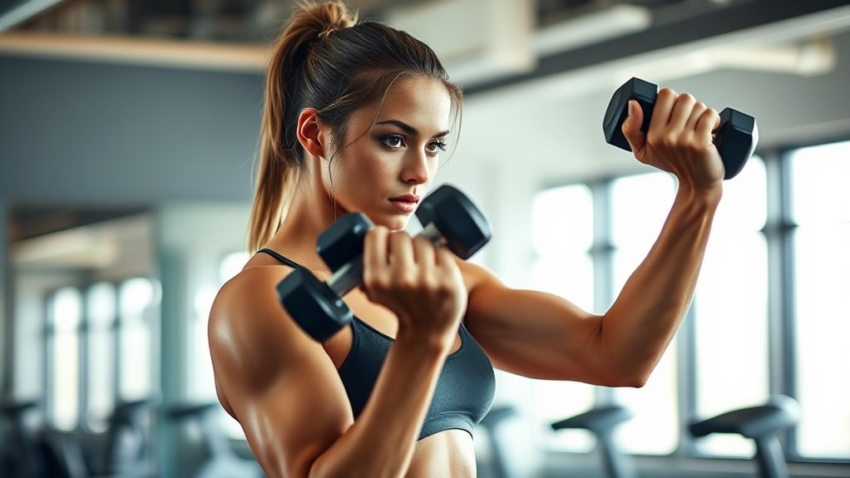
The Best Workouts for Beginners to Build Strength
You're about to start a strength-building adventure that will transform your body and reveal a stronger, more confident you. As a beginner, focus on building core strength with exercises like squats, push-ups, and planks that target major muscle groups. Progress to variations like goblet squats and diamond push-ups to challenge yourself. Leg and upper body strengthening routines should target key muscle groups with exercises like deadlifts and leg press. Don't forget to incorporate low-impact cardio options like cycling and swimming to improve cardiovascular health. Now that you've got a solid foundation, it's time to take your strength training to the next level – and we're just getting started.
Building Core Strength Essentials
Since a strong core is the foundation of good overall fitness, building core strength is vital for beginners. You'll be surprised at how it can improve your posture, balance, and overall athletic performance. A strong core provides core stability, which is fundamental for maintaining good form and preventing injuries during exercise.
When it comes to building core strength, you can't go wrong with abdominal exercises. These exercises target your transverse abdominis muscle, which is the deepest abdominal muscle that wraps around your spine and pelvis. This muscle is responsible for stabilizing your core and maintaining good posture.
You can start with simple exercises like planks, leg raises, and bicycle crunches. These exercises will engage your core muscles and help you build strength and endurance. Remember to start slow and gradually increase the intensity and duration as you build strength. It's likewise fundamental to focus on proper form and technique to avoid straining your back or neck.
Incorporating core exercises into your workout routine will have a significant impact on your overall fitness. You'll notice improvements in your posture, balance, and overall athletic performance. So, make sure to prioritize core strength exercises in your workout routine to build a strong foundation for overall fitness.
Bodyweight Exercises for Beginners
You're about to learn the most effective bodyweight exercises to get you started on your fitness path. Start with squats to build strong legs, then master push-ups to target your chest and shoulders. Next, try holding a plank to engage your core and improve your overall stability.
Start With Squats
When you're new to working out, it's essential to start with exercises that engage multiple muscle groups at once, and squats are an excellent choice. Squats work your legs, glutes, and core, making them an efficient exercise for building overall strength. To get started, focus on proper squat mechanics. Stand with your feet shoulder-width apart, then bend your knees and lower your body until your thighs are parallel to the ground. Push through your heels to return to standing.
As you become more comfortable with the movement, you can experiment with squat variations. Try sumo squats, where your feet are wider apart, or pistol squats, which target one leg at a time. You can additionally add depth or pause at the bottom of the squat to increase the challenge. Remember to listen to your body and only do what feels comfortable and safe. Start with lower reps and sets, and gradually increase as you build strength and confidence. With consistent practice, you'll be squatting like a pro in no time!
Master Push-Ups
Now that you've got squats down, it's time to shift your focus to upper body exercises that'll help you build overall strength and endurance. Achieving proficiency in push-ups is a great way to do just that. You'll be working multiple muscle groups, including your chest, shoulders, and triceps.
To get started, focus on perfecting your form. Keep your hands shoulder-width apart, engage your core, and lower your body until your chest almost touches the ground. Push back up to the starting position and repeat.
- Start with traditional push-ups and gradually move on to more challenging variations, such as diamond push-ups or decline push-ups.
- Use a slow and controlled tempo to guarantee you're targeting the right muscles.
- Aim for 3 sets of 10-15 reps to begin with, and increase the difficulty as you build strength and endurance.
Try Plank Hold
Three key muscle groups – your core, arms, and shoulders – will thank you for incorporating plank holds into your workout routine. This exercise is a great way to build strength and endurance, and it's easy to modify to suit your fitness level. Start by getting into a plank position with your hands shoulder-width apart and your feet hip-width apart. Engage your core by drawing your belly button in the direction of your spine, and keep your shoulders down and away from your ears.
Hold this position for as long as you can, aiming for at least 30 seconds to start. As you get stronger, you can increase the duration or try plank variations, such as lifting your legs or arms off the ground. Remember to focus on core engagement and keep your body in a straight line from head to heels. Don't let your hips sag or your back arch – this can put strain on your joints. With regular practice, you'll be building strength and stability in no time.
Squat Variations for Strength
You're about to take your squat game to the next level! You'll start by perfecting the bodyweight squat basics, building a solid foundation for more advanced variations. From there, you'll progress to the goblet squat and eventually take on the challenging pistol squat.
Bodyweight Squat Basics
Bodyweight squats are an excellent exercise for strengthening your legs and glutes, and they're a great place to start if you're new to working out. By perfecting the squat form, you'll be able to build strength and confidence that will translate to other exercises.
When performing a bodyweight squat, focus on:
- Keeping your back straight and your core engaged to maintain good posture
- Lowering yourself down slowly, keeping your weight in your heels
- Pushing through your heels to return to standing, squeezing your glutes at the top
The squat benefits are numerous, including increased strength, improved balance, and improved overall fitness. By incorporating bodyweight squats into your routine, you'll be on your way to building strong, toned legs and glutes that will serve you well in all aspects of life. Remember to focus on proper squat form to get the most out of this exercise and to avoid injury. With consistent practice, you'll be able to tackle more challenging squat variations and take your fitness to the next level.
Goblet Squat Progression
Now that you've mastered the bodyweight squat, it's time to take your squat game to the next level with the goblet squat progression. This variation will help you build strength and improve your overall squat technique.
To perform a goblet squat, hold a weight or kettlebell at your chest with both hands, keeping your elbows close to your body. This will help you maintain proper form and engage your core muscles. As you lower into the squat, keep your back straight, chest up, and push through your heels to return to standing. The goblet squat benefits include increased strength in your legs, glutes, and core, in addition to improved balance and coordination. Focus on proper goblet squat technique to get the most out of this exercise and avoid injury. Start with a lighter weight and gradually increase the load as you build strength and confidence. With consistent practice, you'll be able to tackle more challenging squat variations and see significant gains in your overall strength.
Pistol Squat Challenge
As you've progressed through the goblet squat, it's time to take on a more challenging squat variation that will test your strength, balance, and coordination: the pistol squat. This single-leg squat requires you to lift one leg off the ground, engaging your core and leg muscles to maintain balance and stability. It's a game-changer for building strength, improving flexibility, and boosting overall athletic performance.
Here's what you can expect from the pistol squat challenge:
- Increased strength: Pistol squats work multiple muscle groups, including your quadriceps, hamstrings, glutes, and core, making you stronger and more resilient.
- Improved balance and coordination: By lifting one leg off the ground, you'll develop better balance and coordination, reducing your risk of injury and improving overall athletic performance.
- Improved flexibility: Pistol squats require a deeper range of motion, increasing flexibility in your hips, knees, and ankles.
Mastering pistol squat techniques will reveal numerous pistol squat benefits, including increased strength, improved balance, and improved flexibility. Are you ready to take on the pistol squat challenge and transform your strength training routine?
Push and Pull Exercises
When you're starting out with a new fitness routine, it's vital to focus on exercises that work multiple muscle groups at once, and push and pull exercises are a great place to begin. These exercises target your upper body, engaging your muscles to improve overall strength and endurance.
Push exercises, such as push-ups, work your chest, shoulders, and triceps. They're fundamental for building strength and stability. You can modify push-ups to suit your fitness level, trying variations like diamond push-ups, decline push-ups, or even assisted push-ups using a resistance band.
Pull exercises, like pull-ups, target your back, shoulders, and biceps. They're advantageous for improving posture, reducing injury risk, and enhancing overall athletic performance. The pull-up benefits extend beyond aesthetics, as they likewise engage your core and improve grip strength. If you're new to pull-ups, start with assisted pull-ups or use a resistance band to make the exercise more manageable.
Here is a sample workout routine to get you started:
| Exercise | Sets | Reps |
|---|---|---|
| Push-ups | 3 | 10-12 |
| Incline Dumbbell Press | 3 | 12-15 |
| Pull-ups | 3 | as many as possible |
| Lat Pulldowns | 3 | 12-15 |
Remember to start slow, focus on proper form, and gradually increase the intensity as you build strength and confidence.
Leg Strengthening Workout Routine
Three key muscle groups in your lower body – quadriceps, hamstrings, and glutes – play a crucial role in maintaining balance, stability, and overall athletic performance. As a beginner, you might find it challenging to dedicate an entire day to leg exercises, but trust us, it's worthwhile. A well-structured leg day can help you build strength, improve mobility, and even boost your overall fitness.
Here's a breakdown of what your leg strengthening workout routine should look like:
- Warm-up: Start with mobility drills to loosen up your legs and prepare them for the workout ahead. This can include leg swings, lunges, and calf raises.
- Squats and Lunges: Focus on exercises that target your quadriceps, hamstrings, and glutes. Squats, lunges, and deadlifts are great options to start with. Aim for 3 sets of 8-12 reps each.
- Leg Press and Leg Extensions: Finish off your leg day with leg press and leg extensions to target your quadriceps and hamstrings. Again, aim for 3 sets of 8-12 reps each.
Remember to listen to your body and adjust the weights and reps according to your fitness level. It's important to challenge yourself, but not to the point of injury. With consistency and patience, you'll be on your way to stronger, more toned legs in no time.
Upper Body Workout Basics
Your upper body is comprised of several key muscle groups, including your chest, back, shoulders, biceps, and triceps. As a beginner, it is crucial to understand the basics of upper body workouts to build strength effectively. You'll want to focus on exercises that target multiple muscle groups at once, as this will help you achieve overall upper body strength more efficiently.
When it comes to strength training, you'll want to start with compound exercises that work multiple joints and muscle groups simultaneously. For your upper body, this includes exercises like push-ups, rows, and shoulder presses. These exercises will help you build strength in your chest, back, and shoulders. You'll additionally want to incorporate exercises that target your biceps and triceps, such as bicep curls and tricep dips.
Remember to start with lighter weights and progressively increase the weight as you build strength. It is likewise crucial to focus on proper form and technique to avoid injury. Aim to do 3-4 sets of 8-12 reps for each exercise, and rest for 60-90 seconds between sets. By incorporating these upper body exercises into your strength training routine, you'll be on your way to building a stronger, more toned upper body.
Building Stronger Shoulders Fast
You've established a solid foundation in upper body workout basics, now it's time to zero in on building stronger shoulders fast. Having strong shoulders will improve your overall posture, reduce the risk of injury, and boost your overall athletic performance.
To achieve this, it is crucial to focus on exercises that target your deltoids, trapezius, and rotator cuff muscles. Here are three key areas to concentrate on:
- Shoulder Mobility: Incorporate exercises that improve your shoulder mobility, such as arm circles and shoulder rolls. This will help increase your range of motion and reduce stiffness.
- Dumbbell Presses: Dumbbell presses are an effective way to build shoulder strength. Start with lighter weights and gradually increase the load as you become more comfortable with the exercise.
- Rotator Cuff Strengthening: Strengthening your rotator cuff muscles will help stabilize your shoulders and reduce the risk of injury. Exercises like lateral raises and rear delt flys are great for targeting these muscles.
Remember to start slow and gradually increase the intensity of your workouts as your shoulders become stronger. With consistent practice and patience, you'll be on your way to building stronger shoulders fast.
Low-Impact Cardio for Strength
As you build stronger shoulders, don't forget to incorporate low-impact cardio exercises into your workout routine to boost your overall strength and endurance. Cardio exercises are often overlooked, but they play a significant role in improving your overall fitness level. Low-impact options, such as cycling, swimming, or using an elliptical machine, are perfect for beginners who want to avoid high-impact activities that can put excessive stress on their joints.
Incorporating low-impact cardio exercises into your routine can bring numerous benefits. For one, it improves your cardiovascular health by strengthening your heart and increasing blood flow. This, in turn, helps your body deliver oxygen and nutrients to your muscles more efficiently, allowing you to perform daily tasks with more energy and endurance. Furthermore, cardio exercises help you burn calories and shed pounds, revealing the muscle mass you've been working hard to build.
When it comes to low-impact cardio, the key is to start slow and gradually increase your intensity and duration. Begin with short sessions of 20-30 minutes, three to four times a week, and gradually increase your time as your body adapts. Remember to listen to your body and rest when needed, as overexertion can lead to injury. By incorporating low-impact cardio exercises into your routine, you'll be on your way to achieving overall strength and endurance.
Progressive Overload for Results
Three key principles underpin successful strength training: consistency, patience, and progressive overload. You can't build strength without them. Progressive overload, in particular, is essential for making gains. It means gradually increasing the weight, resistance, or reps over time to challenge your muscles and stimulate growth.
Here's what progressive overload looks like in practice:
- You start with a weight that allows you to complete the given number of reps with good form.
- As you get stronger, you increase the weight in small increments (2.5-5lbs) to continue challenging your muscles.
- You repeat this process consistently, pushing yourself to lift more than you did last week, last month, or last year.
Frequently Asked Questions
How Often Should I Work Out to See Noticeable Results?
You're probably enthusiastic to see those gym results, right? Did you know that 75% of people who start a new exercise routine give up within the first three months? To avoid being part of that statistic, you should aim to work out 3-4 times a week, with at least one day of rest in between. With consistent effort, you can start seeing noticeable results in as little as 6-8 weeks. Stay committed, and you'll be on your way to reaching your fitness goals!
Can I Do Strength Training With an Injury or Chronic Pain?
When dealing with an injury or chronic pain, it is crucial to prioritize your well-being. You can still do strength training, but you'll need to make modifications to accommodate your limitations. Focus on low-impact exercises and gentle movements that don't exacerbate the issue. Pain management techniques, such as breathing exercises and gentle stretching, can likewise help. Consult with a healthcare professional or fitness expert to create a personalized plan that suits your needs and promotes safe, effective progress.
Do I Need to Warm up Before Every Workout Session?
You're about to commence a workout expedition a million times more effective with this vital question: do you need to warm up before every workout session? Absolutely! Warming up is not optional, it's fundamental. You'll reap warm up benefits like increased flexibility, improved performance, and reduced injury risk. Start with dynamic warm up exercises like leg swings, arm circles, and light cardio to get your blood flowing. Trust us, your body (and future self) will thank you.
How Long Does It Take to Build Noticeable Muscle Mass?
When you start a workout routine, you're probably keen to see results. So, how long does it take to build noticeable muscle mass? As a beginner, it's important to understand that muscle growth takes time and consistency. With a well-structured workout plan and proper nutrition, you can start seeing results in 6-8 weeks. Remember, patience is key! Focus on progressive overload, and don't forget to listen to your body. With these beginner tips, you'll be on your way to building strong, lean muscle in no time.
Can Strength Training Help With Weight Loss or Just Tone?
Did you know that 75% of weight loss is attributed to diet, whereas exercise accounts for only 25%? You're on the right track by incorporating strength training into your routine! It can certainly help with weight loss, not just toning. By creating a caloric deficit through a combination of diet and exercise, you'll shed pounds. Furthermore, as you build muscle, your body will require more energy for muscle recovery, further boosting your metabolism and supporting weight loss.