
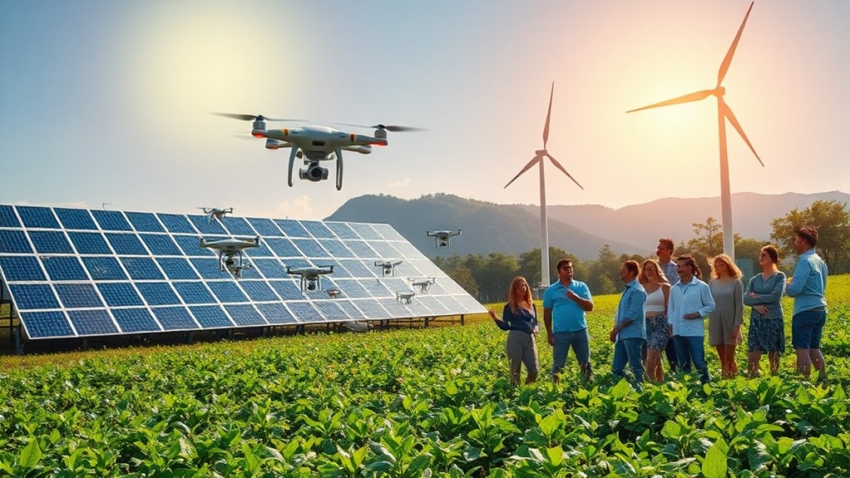
The Role of AI in Tackling Climate Change Challenges
AI is pivotal in addressing climate change by improving data integration, optimizing energy efficiency, and enhancing predictive modeling. Its machine learning algorithms refine climate models, enabling more accurate forecasts and strong scenario planning. Furthermore, AI contributes to smart resource management, boosting agricultural productivity while minimizing environmental impact. Through real-time monitoring, AI tracks pollutants and biodiversity, informing evidence-based policymaking. By facilitating renewable energy integration and offering actionable insights to leaders, AI improves the effectiveness of climate action initiatives. Exploring these facets reveals an extensive view of AI's transformative impact on climate resilience and sustainability.
Understanding AI and Climate Change
As the world grapples with the escalating impacts of climate change, grasping the role of artificial intelligence (AI) in addressing these challenges becomes increasingly important. The intersection of AI and climate policy presents a unique opportunity for influential stakeholders to drive innovation and implement effective solutions. Comprehending AI's potential involves not only technological adoption but also a vigilant awareness of AI ethics and data privacy concerns that accompany its deployment.
Incorporating AI into climate strategies requires strategic resource allocation and the establishment of collaborative initiatives that improve public awareness. By cultivating an environment supportive of education integration, we can empower a new generation of leaders equipped to leverage AI for environmental justice. This includes ensuring equitable access to technological advancements that can mitigate climate risks for vulnerable populations.
Innovation funding is necessary to stimulate research and development that integrates AI capabilities into climate solutions. Such investment can catalyze breakthroughs in areas like predictive modeling, risk assessment, and emissions tracking, which are critical for informed decision-making. Additionally, it enables the formulation of robust climate policies that are data-driven and responsive to real-time conditions.
Ultimately, grasping AI's role in combating climate change transcends mere technological implementation; it calls for a holistic approach that emphasizes ethical considerations, encourages collaborative efforts, and prioritizes the well-being of all communities. This strategic alignment can transform the narrative around climate action, positioning AI as a significant instrument in achieving sustainable futures.
AI in Energy Optimization
Energy optimization stands as a critical component in the fight against climate change, and artificial intelligence (AI) offers transformative solutions to improve efficiency across various sectors. By utilizing the strength of AI, we can achieve unprecedented levels of energy efficiency, thereby reducing waste and minimizing the carbon footprint associated with energy consumption.
AI-driven analytics enable real-time monitoring and predictive modeling, providing utilities and consumers alike with actionable insights that improve grid optimization. Through advanced algorithms, AI can analyze vast datasets, optimizing energy distribution and managing supply-demand dynamics more effectively. This guarantees that energy is used where it is needed most, reducing reliance on fossil-fuel-based energy generation during peak times.
Additionally, AI technologies facilitate the integration of renewable energy sources into existing grids, improving resilience and flexibility. For instance, machine learning algorithms can forecast energy production from solar and wind, enabling grid operators to balance renewable energy inputs with consumption patterns effortlessly. This not just stabilizes the grid but also strengthens the shift to a sustainable energy future.
Moreover, AI empowers businesses to implement energy-saving measures, from smart thermostats to intelligent lighting systems, that can collectively lead to substantial energy savings. By optimizing operational efficiencies, companies can reduce overhead costs at the same time contributing to climate goals.
Enhancing Climate Modeling
The integration of artificial intelligence in energy optimization sets the stage for advancements in climate modeling, enabling more accurate predictions and analyses of climate systems. As the world grapples with the urgency of climate change, the need for precise climate simulations has never been more critical. AI technologies facilitate the processing of vast datasets, allowing researchers to uncover intricate patterns and correlations in climate behavior that were previously overlooked.
The strength of AI-driven models lies in their ability to improve data accuracy. By employing machine learning algorithms, scientists can refine existing climate models, resulting in simulations that reflect real-world intricacies with greater fidelity. This advancement not only enhances the reliability of climate projections but empowers policymakers with the insights needed to make informed, strategic decisions.
Furthermore, AI's capacity to assimilate and analyze data from diverse sources, such as satellite imagery and oceanographic measurements, boosts the robustness of climate models. This thorough approach enables stakeholders to anticipate future climate scenarios, effectively mitigating risks associated with climate variability.
As businesses and governments aim for sustainability, investing in AI-boosted climate modeling becomes imperative. The stakes are high; the ability to predict and respond to climate shifts can safeguard economies, ecosystems, and communities. In this era of uncertainty, utilizing the potential of AI in climate modeling is not just advantageous—it is critical for those in positions of influence who wish to lead the charge against the climate crisis.
Smart Resource Management
Though traditional resource management often falls short in addressing the intricacies of climate change, the application of artificial intelligence offers innovative solutions that improve efficiency and sustainability. By utilizing the strength of AI, organizations can transform resource allocation strategies, ensuring that every asset is utilized to its maximum potential. This optimization is critical in an era where resources are finite and demands are escalating.
AI-driven smart resource management employs advanced algorithms to analyze vast datasets, thereby enabling seamless data integration across various platforms. This integration allows for an extensive view of resource availability, consumption patterns, and environmental impacts, facilitating more informed decision-making. In sectors such as energy, agriculture, and water management, AI can predict resource needs and allocate them in real-time, minimizing waste and enhancing resilience against climate stresses.
Moreover, AI empowers stakeholders to identify inefficiencies in existing systems, leading to targeted interventions that mitigate adverse environmental impacts. By leveraging predictive models, organizations can anticipate fluctuations in resource demand and adjust allocations proactively, ensuring sustainable practices are embedded within operations.
Ultimately, the adoption of AI in smart resource management aligns with corporate sustainability goals and positions organizations as leaders in the global effort against climate change. Those who embrace these technologies will wield significant influence, shaping the future of resource management and driving a more sustainable world for generations to come.
AI for Predictive Analytics
AI for predictive analytics plays an essential role in enhancing climate modeling, enabling researchers to simulate and understand complex climate systems with greater accuracy. Moreover, it considerably contributes to disaster risk assessment by identifying vulnerable regions and improving preparedness strategies. In addition, advanced emission forecasting techniques driven by AI offer valuable insights into future trends, informing policy decisions aimed at mitigating climate change.
Climate Modeling Enhancements
As climate change continues to pose significant challenges, advancements in predictive analytics are becoming increasingly vital for effective climate modeling. The integration of diverse climate data sources improves the accuracy and reliability of models that inform policy and strategic decision-making. By utilizing machine learning algorithms, researchers can process vast datasets with unprecedented speed and precision, identifying patterns and trends that were previously obscured.
The capacity for climate data integration allows for a more thorough comprehension of complex climate interactions, enabling stakeholders to forecast changes with greater confidence. Machine learning algorithms improve the predictive capability of climate models, thereby equipping leaders with actionable insights crucial for proactive measures. This sophisticated analytical approach promotes the development of targeted strategies that mitigate climate risks and optimize resource allocation.
In an era where decisive action is paramount, leveraging AI-driven predictive analytics in climate modeling not just empowers governments and organizations but positions them to be at the forefront of climate resilience. The potential for transformative impact is immense, paving the way for sustainable solutions that can effectively address the multifaceted challenges posed by climate change.
Disaster Risk Assessment
Utilizing the strength of predictive analytics is essential for improving disaster risk assessment in the context of climate change. By leveraging advanced algorithms and vast datasets, stakeholders can greatly enhance disaster prediction capabilities, enabling timely interventions that can save lives and resources. The integration of AI in predictive analytics empowers decision-makers to identify vulnerable regions, assess potential threats, and allocate resources effectively.
AI-driven models analyze historical data and current climate patterns to forecast extreme weather events, including floods, hurricanes, and droughts. This proactive approach allows for the development of robust risk mitigation strategies customized to specific geographical and socio-economic contexts. By comprehending the likelihood of disasters and their potential impacts, governments and organizations can implement effective measures, including infrastructure improvements and community education, to improve resilience.
Furthermore, the ability to simulate various scenarios enriches strategic planning, ensuring that responses are both swift and effective. As climate change continues to escalate, the importance of sophisticated disaster risk assessment through AI predictive analytics cannot be overstated. This technological advancement not only protects communities but also strengthens economic stability in an increasingly volatile world.
Emission Forecasting Techniques
Effective emission forecasting techniques are vital for comprehending and mitigating the impacts of climate change. Utilizing advanced AI-driven predictive analytics, organizations can achieve unparalleled forecasting accuracy that informs strategic decision-making. These techniques enable the precise identification of emission sources, allowing for targeted initiatives that drive significant emission reduction outcomes.
AI models leverage vast datasets, including historical emissions, industrial activities, and socioeconomic variables, to predict future emission scenarios. By applying machine learning algorithms, forecasts become increasingly refined, empowering policymakers and businesses to understand potential climate impacts and tailor their responses accordingly. This predictive capability is essential in a world where rapid changes necessitate agile responses.
In addition, improved forecasting accuracy allows for the optimization of resources, ensuring that investments in emission reduction technologies yield maximum benefits. As stakeholders utilize AI's potential, they position themselves as leaders in the fight against climate change, demonstrating a commitment to sustainable practices.
Ultimately, robust emission forecasting techniques not only facilitate informed decision-making but also reinforce accountability. By embracing these innovations, organizations can effectively navigate the intricacies of climate challenges while championing a future built on sustainability and resilience.
Carbon Footprint Reduction
Artificial intelligence plays an essential role in carbon footprint reduction through smart energy management and sustainable supply chain solutions. By optimizing energy consumption and logistics, AI not only improves operational efficiency but additionally greatly lowers greenhouse gas emissions. These advancements are vital in the global effort to mitigate climate change and promote sustainability.
Smart Energy Management
As the urgency to combat climate change intensifies, smart energy management emerges as a crucial tool for reducing carbon footprints across various sectors. By utilizing advanced technologies, organizations can optimize energy consumption, improve efficiency, and greatly lower their greenhouse gas emissions. Central to this strategy is smart grid integration, which facilitates real-time data exchange between energy suppliers and consumers, allowing for more informed decision-making and resource allocation.
Demand response programs further empower businesses to adjust their energy usage during peak periods, thereby reducing strain on the grid while minimizing costs. These programs incentivize users to shift or curtail their energy consumption, promoting a more sustainable and resilient energy ecosystem. The synergy between smart grid technologies and demand response initiatives not only streamlines energy distribution but additionally amplifies the potential for renewable energy sources.
Incorporating AI-driven analytics into smart energy management systems can transform how organizations approach their energy strategies. By predicting usage patterns and optimizing operational performance, companies can lead in carbon footprint reduction while positioning themselves as trailblazers in the fight against climate change. Embracing these innovations is not merely an option; it is a necessity for those who aspire to wield influence in a swiftly evolving world.
Sustainable Supply Chain Solutions
The integration of smart energy management practices sets the stage for addressing broader sustainability challenges, including those found within supply chains. As industries grapple with the imperative to reduce their carbon footprint, sustainable supply chain solutions emerge as a critical leverage point. By utilizing advanced AI technologies, organizations can achieve unparalleled supply chain optimization, enabling them to identify inefficiencies and implement strategic improvements that minimize environmental impact.
Sustainable sourcing is a cornerstone of this transformative approach. By prioritizing suppliers committed to environmentally responsible practices, companies not only improve their brand reputation but also fortify their market position. AI-driven analytics can assess supplier performance, ensuring compliance with sustainability standards during the process of driving accountability throughout the supply chain.
Moreover, predictive modeling allows firms to forecast demand accurately, reducing overproduction and waste. By integrating these smart solutions, businesses can open new avenues for profitability while making significant strides in carbon footprint reduction. Ultimately, the pursuit of sustainable supply chain solutions empowers organizations to lead in the shift towards a greener economy, positioning them as pioneers in the fight against climate change.
Sustainable Agriculture Solutions
Sustainable agriculture solutions are increasingly recognized as crucial in the fight against climate change, with innovative practices that improve productivity in addition to minimizing environmental impact. The integration of advanced technologies, particularly artificial intelligence, is revolutionizing the agricultural sector, empowering farmers to make data-driven decisions that boost efficiency and sustainability.
Precision farming stands at the forefront of these solutions, utilizing AI-driven analytics to optimize resource allocation, reduce waste, and increase crop yields. By leveraging satellite imagery, soil sensors, and predictive modeling, farmers can monitor field conditions with unprecedented accuracy. This technology not merely facilitates targeted interventions but also reduces the over-reliance on fertilizers and pesticides, which contribute to environmental degradation.
Furthermore, AI improves crop resilience by analyzing climatic patterns and predicting adverse weather events. Through machine learning algorithms, farmers can select crop varieties that are more resistant to pests and diseases, along with those that thrive under changing climate conditions. This proactive approach empowers agricultural stakeholders to adapt their strategies in real-time, ensuring food security in the face of climate volatility.
Monitoring Environmental Impact
Monitoring environmental impact is essential for grasping the effects of climate change and implementing effective solutions. Advanced technologies, including real-time data collection, predictive modeling techniques, and remote sensing technologies, play a key role in this process. These tools enable researchers and policymakers to gather critical information, forecast future trends, and make informed decisions to mitigate environmental degradation.
Real-time Data Collection
How can real-time data collection transform our grasp of environmental impact? The integration of advanced sensor networks enables us to gather immediate, actionable insights into environmental conditions. This potent capability empowers decision-makers to respond adeptly to urgent climate challenges.
Consider the following transformative benefits of real-time data collection:
- Enhanced Monitoring: Continuous data streams allow for precise tracking of pollutants, temperature changes, and biodiversity fluctuations, revealing trends that static data cannot.
- Proactive Decision-Making: By leveraging integrated data from multiple sources, stakeholders can anticipate environmental shifts and mitigate risks before they escalate into crises.
- Informed Policy Development: Real-time insights facilitate evidence-based policymaking, ensuring that regulations and initiatives are grounded in current environmental realities rather than outdated information.
Harnessing the strength of data integration and sensor networks, real-time data collection emerges as a critical tool in our fight against climate change. By enabling a dynamic insight into our ecosystems, we can forge robust strategies that not only address current impacts but likewise pave the way for a sustainable future. The pursuit of environmental mastery begins with the relentless pursuit of knowledge.
Predictive Modeling Techniques
While real-time data collection provides immediate insights, predictive modeling techniques offer a forward-looking perspective that is essential for comprehending and mitigating environmental impact. These sophisticated methods allow stakeholders to simulate various climate scenarios, enabling them to anticipate potential outcomes and make informed decisions.
Predictive modeling relies on advanced algorithms that assimilate vast datasets, integrating historical climate data with current observations. This data assimilation forms the backbone of robust models that can project future environmental conditions, identifying significant trends and hazards. By employing machine learning and artificial intelligence, these models improve their accuracy and adaptability, ensuring that policymakers have the most reliable forecasts at their disposal.
Moreover, predictive modeling techniques enable organizations to evaluate the effectiveness of potential interventions before implementation. By simulating different approaches, decision-makers can prioritize strategies that yield the most substantial benefits, optimizing resource allocation. As climate change poses unprecedented challenges, utilizing the influence of predictive modeling is not just an option; it is a necessity for shaping resilient and sustainable futures. In this scenario, the interplay between data assimilation and predictive analytics becomes paramount, driving impactful solutions that address the urgent need for environmental stewardship.
Remote Sensing Technologies
As climate change intensifies, the role of remote sensing technologies in monitoring environmental impact becomes increasingly vital. These advanced systems enable decision-makers to acquire precise insights regarding ecological changes, thereby empowering strategic action against climate degradation. The integration of AI with remote sensing applications improves our ability to analyze vast datasets and derive meaningful conclusions.
Key benefits of remote sensing technologies include:
- Real-Time Monitoring: Satellite imagery analysis provides up-to-the-minute data on deforestation, urban sprawl, and land use changes, allowing for timely interventions.
- Biodiversity Assessment: These technologies facilitate the tracking of species distribution and habitat loss, critical for conservation efforts.
- Disaster Management: Remote sensing enables the early detection of natural disasters, such as floods or wildfires, equipping authorities with the information needed to mitigate their impacts effectively.
AI-Powered Renewable Energy
As the shift to renewable energy sources is vital for mitigating climate change, the integration of artificial intelligence (AI) has emerged as a significant force in optimizing these technologies. AI's capabilities in data analysis and predictive modeling are revolutionizing the efficiency of renewable energy systems, thereby maximizing their output and reliability.
One of the most significant applications of AI is in solar panel optimization. By utilizing machine learning algorithms, AI can analyze weather patterns, energy consumption data, and performance metrics to improve solar panel placement and operation. This results in increased energy capture and reduced maintenance costs, making solar energy not merely more viable but also more competitive against traditional energy sources.
Similarly, AI plays an essential role in wind energy forecasting. Advanced algorithms can assess vast datasets from meteorological stations and satellite observations to predict wind patterns with unprecedented accuracy. This allows energy producers to optimize turbine operation schedules and manage energy storage more effectively, ensuring that energy supply aligns with demand. By accurately forecasting wind energy availability, operators can minimize waste and improve grid stability, thus reinforcing the overall resilience of renewable energy systems.
Case Studies and Innovations
The integration of AI in renewable energy has led to notable case studies that exemplify its transformative impact on climate change efforts. These innovations not only highlight AI advancements but also underscore the importance of collaborative frameworks aimed at sustainability and environmental justice. By utilizing machine learning and climate data, various initiatives are reshaping our approach to renewable energy and ecosystem monitoring.
- Google's DeepMind: Partnering with renewable energy companies, DeepMind employs AI to optimize energy consumption in data centers, achieving a 30% reduction in energy usage while supporting green technologies. This case showcases the potential for AI to drive down costs while promoting sustainability initiatives.
- IBM's Green Horizons: Through innovative partnerships with municipalities, IBM leverages AI to analyze climate data and predict air quality, enabling cities to implement effective policy implications for environmental justice. The focus on technological equity guarantees that disadvantaged communities also benefit from clean air initiatives.
- Microsoft's AI for Earth: This initiative utilizes AI to tackle global challenges, including climate change. By funding projects that monitor ecosystems, Microsoft cultivates collaborations that improve data accessibility and drive impactful sustainability initiatives worldwide.
These case studies exemplify how AI is not merely a technological tool but a catalyst for change, driving forward-thinking partnerships and enabling transformative solutions in the battle against climate change.
Frequently Asked Questions
How Does AI Influence Public Policy on Climate Change?
AI notably influences public policy on climate change by shaping regulatory frameworks, enhancing data transparency, and promoting stakeholder engagement. By providing actionable insights, AI aids in the development of robust policy frameworks that address environmental challenges. In addition, the regulation of AI itself becomes vital, ensuring ethical deployment during the prioritization of sustainability. This interplay empowers decision-makers to create informed, impactful strategies that resonate with both public interests and global sustainability goals, driving effective climate action forward.
What Are the Ethical Concerns Regarding AI in Climate Initiatives?
The ethical concerns surrounding AI in climate initiatives primarily revolve around data privacy and algorithmic bias. As AI systems analyze vast datasets, the risk of compromising sensitive information heightens, raising questions about consent and security. Moreover, algorithmic bias can lead to inequitable outcomes, disproportionately affecting marginalized communities. Stakeholders must navigate these intricacies to guarantee that AI advancements promote inclusivity and transparency, in the end enhancing the effectiveness of climate initiatives as they protect ethical standards.
Can AI Contribute to Biodiversity Conservation Efforts?
Artificial Intelligence can greatly improve biodiversity conservation efforts. Through machine learning algorithms, researchers can analyze vast datasets for effective habitat modeling, identifying critical areas for preservation. Conservation drones equipped with AI capabilities facilitate real-time monitoring of ecosystems, enabling precise species tracking and population assessments. This integration of technology not just optimizes resource allocation but likewise empowers conservationists to make informed decisions, eventually cultivating a more resilient and diverse ecological environment.
How Can Individuals Leverage AI for Personal Sustainability?
In a world where convenience often clashes with sustainability, individuals can utilize AI to achieve personal eco-efficiency. Smart home technologies enable seamless energy management, optimizing usage as well as minimizing waste. Coupled with carbon tracking applications, users can monitor their emissions and make informed decisions to reduce their carbon footprint. By employing these tools, individuals not only improve their lifestyle but likewise assert their influence in promoting a more sustainable future.
What Industries Are Most Impacted by AI Climate Solutions?
Industries most impacted by AI-driven climate solutions include agriculture and energy. In agriculture, optimization techniques improve crop yields during minimizing resource use, leading to sustainable farming practices. Energy sectors benefit from AI through enhanced energy efficiency, enabling better management of consumption and reduction of waste. These advancements empower organizations to achieve both economic and environmental goals, positioning them as leaders in the shift toward a sustainable future.